Why Is Crypto Crashing Right Now? Top Reasons Investors Need to Know Today
Introduction
Cryptocurrency has become one of the most talked-about financial markets in the world. Over the last decade, digital assets like Bitcoin and Ethereum have created massive wealth for investors, but they have also produced sudden and painful market crashes.
Whenever prices begin falling sharply, investors ask the same important question: why is crypto crashing, and will crypto recover again?
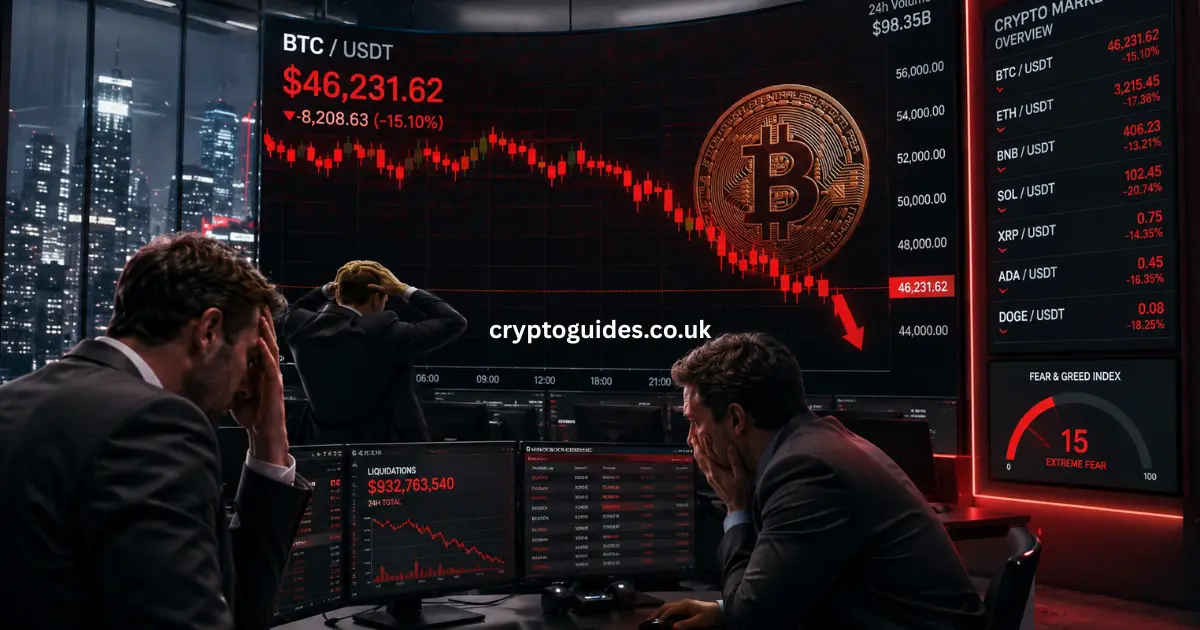
In 2026, the crypto market is once again experiencing strong volatility. Billions of dollars have been wiped from the market, major cryptocurrencies have declined rapidly, and fear has spread among investors worldwide.
But crypto crashes are not new. The market has survived several major downturns before and later recovered stronger than expected.
Quick Market Summary 2026
Crypto markets are under pressure due to global tightening, reduced liquidity, and increased institutional profit-taking, leading to sharp volatility in 2026.
- Macro economic pressure
- ETF profit-taking
- High leverage liquidation events
- Whale selling activity
- Retail panic cycles
What Is Happening in the Crypto Market in 2026?
The cryptocurrency industry in 2026 is far more advanced than it was just a few years ago. Crypto is no longer a niche experiment. Today, blockchain technology powers:
- Digital payments
- Decentralized finance (DeFi)
- NFT ecosystems
- Web3 applications
- Gaming platforms
- Smart contracts
- Institutional investment products
Despite this growth, the market remains extremely volatile.
Bitcoin still dominates the market and strongly influences the prices of other cryptocurrencies. When Bitcoin falls sharply, most altcoins also decline.
Meanwhile, Ethereum continues expanding its blockchain ecosystem through decentralized applications and smart contracts.
Thousands of altcoins compete for investor attention, but this competition also increases speculation and market instability.
Large institutions, hedge funds, and global investment firms now hold billions in crypto assets. While institutional adoption has increased legitimacy, it has also increased the size of market swings.
Why Is Crypto Crashing Right Now?
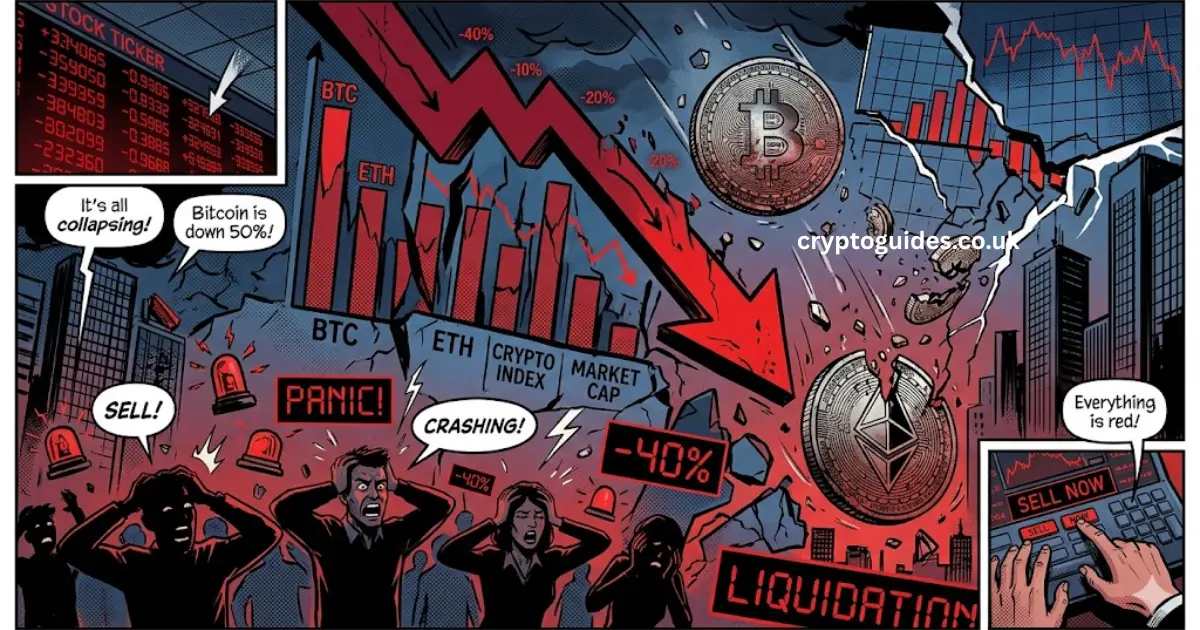
Crypto is crashing due to global economic pressure, high interest rates, institutional selling, leveraged liquidations, and investor fear. These combined factors create sharp market drops.
Top Reasons Behind Crypto Crash
- Global economic pressure
- High interest rates reducing liquidity
- Institutional selling of crypto assets
- Leveraged trading liquidations
- Fear and panic selling in market
Here are the biggest reasons why crypto is crashing in 2026.
1. Global Economic Pressure
One of the biggest reasons behind crypto crashes is the global economy.
When inflation rises or central banks increase interest rates, investors become more cautious. They move money away from risky assets like cryptocurrencies and into safer investments.
Cryptocurrencies are still considered high-risk investments compared to traditional assets such as bonds or dividend stocks.
As liquidity leaves the market, crypto prices often fall rapidly.
2. Institutional Investors Are Selling

Institutional investors now control a large amount of crypto capital.
When large investment firms decide to reduce their crypto exposure, they often sell huge amounts of Bitcoin and other digital assets.
This creates:
- Heavy selling pressure
- Sharp price declines
- Panic among retail investors
Large institutional sell-offs can trigger chain reactions across the entire market.
3. Leveraged Liquidations
Leverage trading is another major reason crypto crashes become extremely severe.
Many traders borrow money to increase their trading positions. While leverage can multiply profits, it also dramatically increases risk.
When prices begin falling:
- Exchanges automatically liquidate leveraged positions
- Forced selling increases market pressure
- Prices crash even faster
This creates a domino effect that can wipe out billions within hours.
4. Whale Activity
Crypto whales are investors or organizations holding massive amounts of cryptocurrency.
When whales move or sell large amounts of crypto:
- The market reacts immediately
- Investor confidence weakens
- Panic spreads quickly
Whale activity often causes short-term market instability.
5. Fear and Investor Psychology
The crypto market is heavily driven by emotions.
As prices decline:
- Fear spreads rapidly
- Social media panic increases
- Investors rush to sell
- Negative news dominates headlines
Similar patterns were observed during previous tightening cycles in global financial markets.
How Long Will the Crypto Crash Last?
One of the hardest questions in crypto investing is predicting how long a market crash will continue.
Historically, crypto crashes have lasted:
- A few months
- One year
- Sometimes several years
It depends on:
- Global economic conditions
- Investor confidence
- Regulations
- Institutional behavior
- Bitcoin market cycles
| Condition | Crash | Bull |
|---|---|---|
| Liquidity | Low | High |
| Sentiment | Fear | Greed |
| Volatility | High | Stable |
Previous Crypto Crashes in History
The 2018 Crypto Winter
After the massive bull run of 2017, crypto prices collapsed in 2018.
Bitcoin lost more than 80% of its value, and many altcoins disappeared completely.
The recovery took nearly two years.
The 2022 Crypto Crash
The 2022 crash was caused by:
- Exchange collapses
- Rising interest rates
- Regulatory uncertainty
- Investor panic
Despite the negativity, the market eventually stabilized and recovered over time.
Bitcoin Halving and Market Recovery

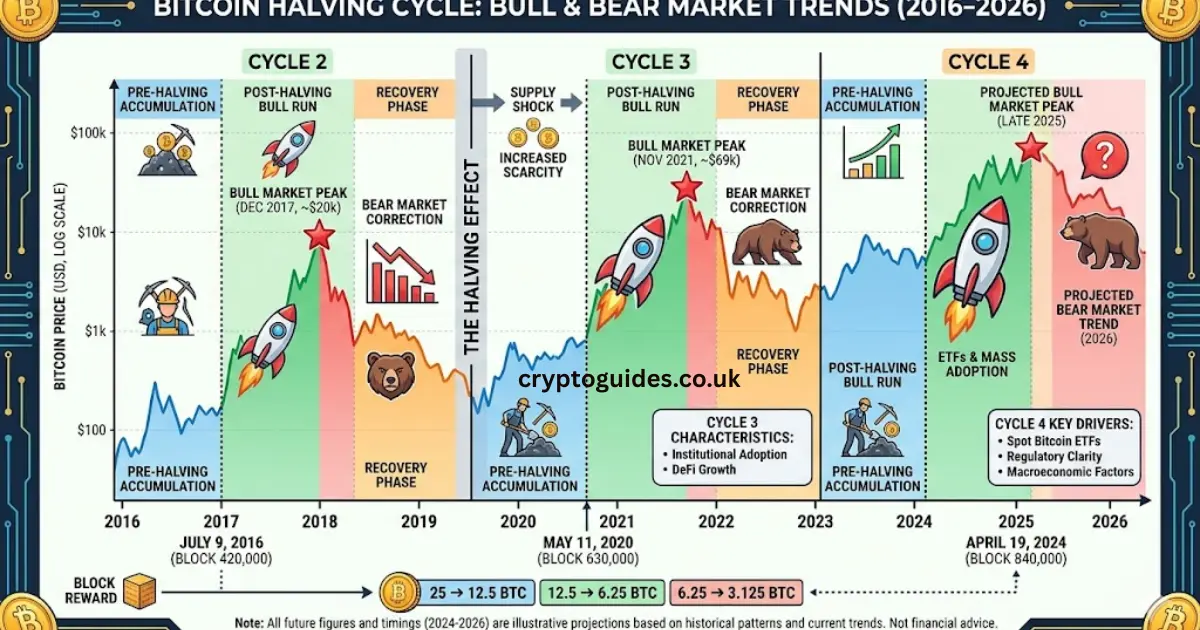
One important factor that often influences crypto recoveries is the Bitcoin halving cycle.
extBitcoinSupplyReductionAfterHalving
Bitcoin halving happens approximately every four years and reduces the number of new Bitcoins entering circulation.
Historically:
- Bull markets often follow Bitcoin halvings
- Reduced supply can increase prices over time
- Investor interest usually returns gradually
The latest Bitcoin halving occurred in 2024, and many analysts believe the market could continue developing throughout 2026 and beyond.
What Should You Do During a Crypto Crash?
Market crashes can create emotional stress for investors. However, making decisions based entirely on fear can lead to larger losses.
Here are smart strategies investors often consider during market downturns.
Stay Calm and Avoid Panic Selling
One of the biggest mistakes during crashes is emotional selling.
Experienced investors usually focus on long-term trends instead of short-term panic.
Review Your Investment Strategy
A market crash is a good time to evaluate:
- Your risk tolerance
- Investment goals
- Portfolio allocation
- Long-term crypto beliefs
Diversify Your Investments
Diversification helps reduce risk.
Many investors spread investments across:
- Multiple cryptocurrencies
- Stocks
- Commodities
- ETFs
- Traditional assets
This can reduce the impact of sudden crypto volatility.
Focus on Strong Crypto Projects
During crashes, weaker projects often disappear.
Investors usually focus on projects with:
- Strong development teams
- Real-world use cases
- Large ecosystems
- Active communities
Will Crypto Recover in 2026?
The biggest question investors ask is:
Will crypto recover again?
While nobody can predict markets with certainty, history suggests that crypto has repeatedly recovered after major crashes.
Several factors support the possibility of long-term crypto recovery.
1. Historical Recovery Patterns
Every major crypto crash in history has eventually been followed by recovery.
Examples include:
- The 2018 crypto winter
- The 2020 pandemic crash
- The 2022 market collapse
After each downturn, the market eventually rebounded and reached new highs.
2. Institutional Adoption Is Growing
Major financial institutions continue investing in crypto infrastructure.
This includes:
- Crypto ETFs
- Custody solutions
- Blockchain investment funds
- Enterprise blockchain systems
Institutional adoption adds long-term legitimacy to the market.
3. Blockchain Technology Continues Evolving
Blockchain innovation is still growing rapidly.
Industries using blockchain include:
- Banking
- Supply chains
- Healthcare
- Gaming
- Identity verification
- International payments
As adoption increases, demand for blockchain ecosystems may continue rising.
4. Global Crypto Adoption Is Increasing
In many countries, cryptocurrencies are becoming popular for:
- Savings
- Payments
- Remittances
- Inflation protection
Emerging economies especially continue showing strong crypto adoption.
5. Investor Sentiment Can Change Quickly
Crypto markets move heavily based on confidence and momentum.
When:
- Regulations improve
- Technology advances
- Economic conditions stabilize
Investor confidence often returns rapidly.
This is why crypto recoveries can happen faster than expected.
Risks That Could Slow Crypto Recovery
Although recovery is possible, several risks still exist.
Regulatory Uncertainty
Governments worldwide continue creating crypto regulations.
Strict policies could impact market growth.
Security Risks
The industry still faces:
- Exchange hacks
- Fraud
- Rug pulls
- Scam projects
Security concerns can damage investor trust.
Economic Recession Risks
If global financial markets remain unstable, investors may avoid risky assets like crypto for longer periods.
Final Thoughts
The cryptocurrency market has always been highly volatile. Large crashes are painful, but they are also part of the market’s history.
The current downturn in 2026 is driven by:
- Economic uncertainty
- Institutional selling
- Fear and panic
- Leveraged liquidations
- Market psychology
However, blockchain technology continues evolving, institutional adoption is growing, and crypto usage worldwide is expanding.
While short-term volatility may continue, many analysts believe the long-term future of cryptocurrency still remains strong.
Investors should focus on:
- Risk management
- Research
- Diversification
- Long-term strategy
rather than emotional reactions during market crashes.
Frequently Asked Questions (FAQs)
Why is crypto crashing today?
Crypto prices usually fall because of economic uncertainty, institutional selling, investor panic, and leveraged liquidations.
Will crypto recover after crashing?
Historically, the crypto market has recovered after every major crash, although recovery timelines vary.
How long do crypto crashes last?
Crypto crashes can last from several months to multiple years depending on market conditions.
Is crypto still a good long-term investment?
Cryptocurrency remains a high-risk investment, but many investors believe blockchain technology has strong long-term potential.
Which crypto usually recovers first?
Bitcoin and Ethereum often recover first because they have the largest adoption and strongest investor confidence.

I am an SEO and Guest Posting expert with 5+ years of professional experience in building high-authority backlinks, strategic outreach, and scalable SEO campaigns, especially in the Crypto and Blockchain industry. Passionate about helping brands achieve sustainable organic growth, I specialize in guest posting, white-hat authority link building, content outreach, and digital PR strategies that enhance online credibility and search engine performance. Over the years, I have collaborated with international clients and global brands, delivering result-driven SEO solutions and placements on high-authority, high-DR websites focused on increasing organic traffic, domain authority, and online visibility in competitive markets.