What is Blockchain? The Definitive 2026 Guide to the Future of Trust
Introduction
In the rapidly shifting landscape of the digital economy, one technology stands as the bedrock of innovation: Blockchain. If you have ever wondered what is blockchain beyond the hype of Bitcoin, you are in the right place. In 2026, this technology has matured from a speculative trend into a critical infrastructure for global finance, supply chains, and digital identity.
This guide is designed to take you from a curious beginner to an informed participant. We will peel back the layers of cryptographic hashing, explore the power of decentralized applications (dApps), and explain why distributed ledger technology (DLT) is the most significant shift in data management since the invention of the internet.
For more information please get in touch
1. What is Blockchain?
Featured Snippet Optimization: Blockchain is a decentralized, distributed ledger technology that records transactions across a vast network of computers. By using cryptography to link records into an immutable chain, it ensures data cannot be altered retroactively. It eliminates the need for central authorities, providing a secure foundation for digital assets and Web3 ecosystems.
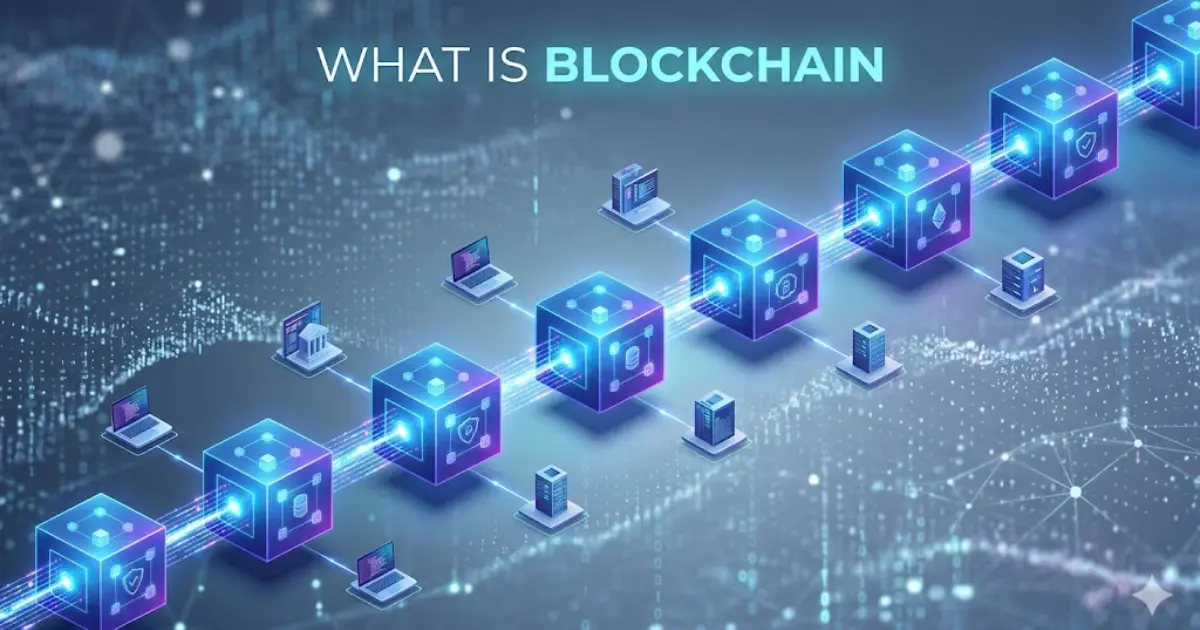
To put it simply, a blackchain is a shared digital record-keeping system. Unlike a standard Excel sheet stored on one computer, this ledger is copied thousands of times across a P2P network. Every time a new transaction occurs, every copy of the ledger is updated simultaneously.
2. The Core Components: Blocks, Nodes, and Miners
To understand the architecture, we must look at the three primary elements that maintain the blockchain ecosystem:
The Block
A block is a container for data. Each block contains:
- Data: The actual transaction details (Sender, Receiver, Amount).
- Hash: A unique digital fingerprint generated by a hashing algorithm (like SHA-256).
- Previous Hash: This is the “glue” that links the current block to the one before it, creating the chain.
The Nodes
A node is any device (usually a computer or server) connected to the blockchain network. Full nodes maintain a complete copy of the transaction history, ensuring transparency and preventing fraud.
Consensus Mechanisms
This is the “rulebook” the nodes follow to agree on the truth. The two most popular methods are:
- Proof of Work (PoW): Used by Bitcoin, where miners solve complex puzzles.
- Proof of Stake (PoS): Used by Ethereum, where validators are chosen based on the number of coins they hold.
3. How Blockchain Works: A Step-by-Step Technical Journey
Let’s trace the journey of a single digital asset transfer:
- Transaction Initiation: A user signs a transaction with their private key (digital signature).
- Broadcasting: The transaction is sent to the mempool (waiting area) of the network.
- Validation: Nodes verify that the user has enough balance and that the signature is valid.
- Clustering: A miner or validator picks several transactions and groups them into a candidate block.
- Solving the Puzzle: The network performs cryptographic verification.
- Adding to the Chain: Once the consensus is reached, the block is appended to the ledger.
- Finality: The transaction is now immutable and visible to everyone on a block explorer.
4. The EEAT Factor: Why Blockchain is Inherently Trustworthy
Google’s Helpful Content Guidelines emphasize Experience, Expertise, Authoritativeness, and Trustworthiness (EEAT). Interestingly, blockchain technology is built on these exact principles:
- Trustworthiness: You don’t have to trust a person; you trust the open-source code.
- Experience: Users gain direct experience by managing their own non-custodial wallets.
- Authoritativeness: The ledger serves as the ultimate authority on “who owns what,” verified by thousands of independent parties.
5. Types of Blockchains: Public, Private, and Hybrid
Choosing the right blockchain protocol depends on the intended use:
- Public blockchain set : Completely permissionless. Anyone can join, read, and write (e.g., Bitcoin, Solana).
- Private Blockchains: Permissioned networks used by corporations (e.g., Hyperledger Fabric). Only authorized users can access the data.
- Consortium Blockchains: Managed by a group of organizations rather than a single entity, ideal for banking networks.
- Hybrid Blockchains: A mix that allows for private data storage with public verification for security.
6. Smart Contracts: The Programmable Future
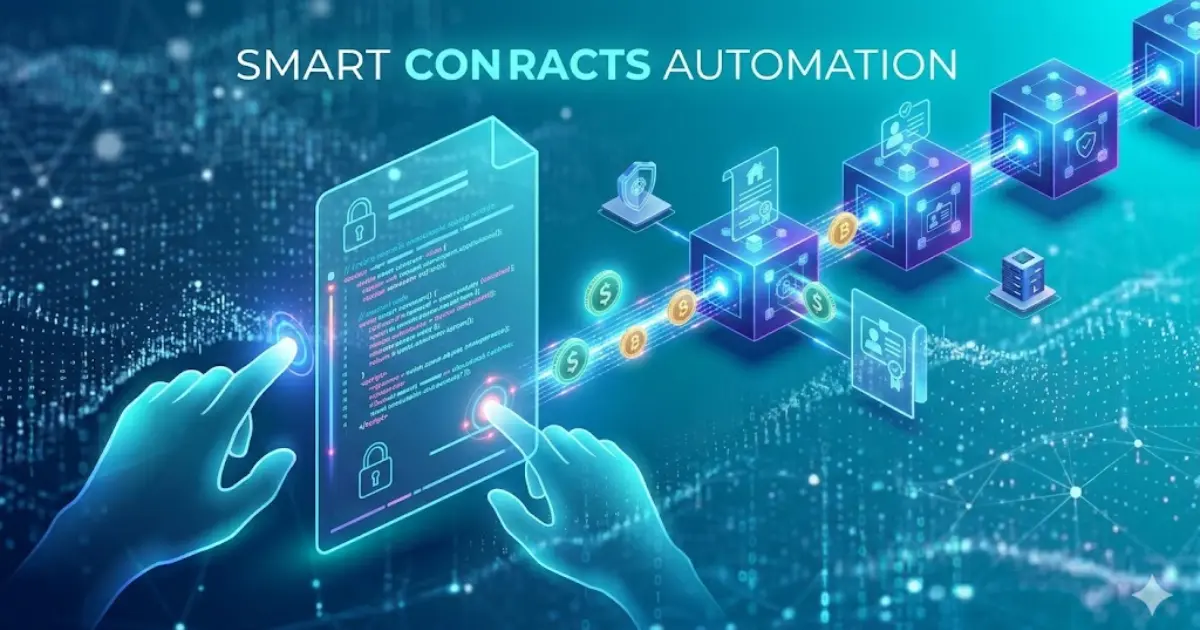
The most revolutionary aspect of modern blockchain is the Smart Contract.
A smart contract is a self-executing piece of code that automatically performs an action when specific conditions are met.
Practical Example: Imagine an insurance claim. Instead of waiting weeks for a human to approve it, a smart contract connected to an oracle (a data feed) can instantly release funds to a traveler if their flight is canceled, based on official airline data. This is the heart of Decentralized Finance (DeFi).
7. Real-World Applications: Beyond the Hype
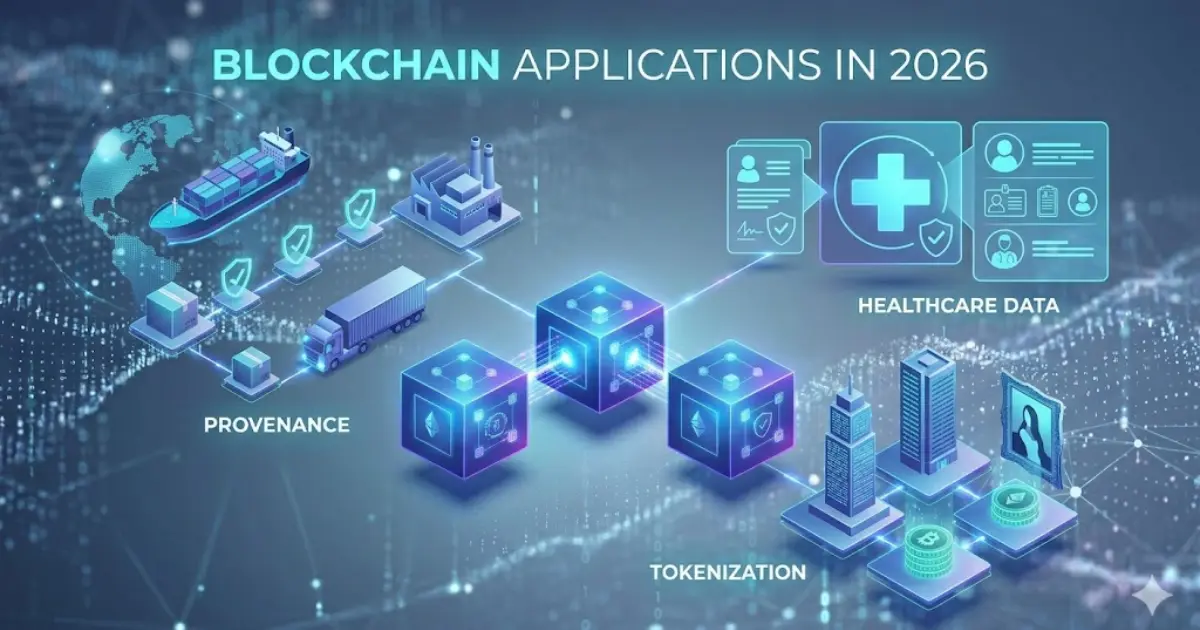
By 2026, all about blockchain technology has permeated several sectors:
Supply Chain Management
Companies like Walmart and Maersk use blockchain to track the provenance of goods. This ensures that “Organic” food really is organic and that “Fair Trade” diamonds are ethically sourced.
Digital Identity & Self-Sovereign Identity (SSI)
Instead of carrying a physical passport, users can hold Verifiable Credentials on their phones. This allows you to prove your age or citizenship without revealing your home address or social security number.
Real Estate & Tokenization
Tokenization allows a $10 million building to be split into 10,000 digital tokens. This lowers the barrier to entry, allowing beginners to invest $1,000 into high-value real-world assets (RWA).
8. Common Pitfalls: What Beginners Get Wrong
If you are new to the world of distributed ledgers, avoid these mistakes:
- Losing Your Seed Phrase: In a decentralized world, there is no “Forgot Password” button. If you lose your keys, you lose your assets.
- Confusing Coin vs. Token: A coin (like BTC or ETH) operates on its own blockchain. A token is built on top of an existing blockchain (like an ERC-20 token).
- Ignoring Gas Fees: Every transaction requires a fee paid to the network. During high traffic, these network fees can become expensive.
9. The 2026 Outlook: AI, IoT, and Interoperability
The future of blockchain technology lies in “The Convergence.” We are seeing:
- AI Integration: AI agents using blockchain to pay each other for data processing.
- Internet of Things (IoT): Your smart fridge ordering milk and paying for it via a micro-transaction on a Layer-2 network.
- Interoperability: Different blockchains (like Bitcoin and Ethereum) finally being able to talk to each other seamlessly through cross-chain bridges.
10. FAQs
Q1: What Is blockchain the same as cryptocurrency?
No. Block chain is the underlying technology (the ledger). Cryptocurrency is just one type of asset that lives on that ledger. Think of blockchain as the internet and Bitcoin as email.
Q2: Can a blockchain be hacked?
The blockchain protocol itself is extremely difficult to hack due to its distributed nature. However, centralized exchanges and individual digital wallets can be compromised if not properly secured with multi-factor authentication.
Q3: Why is blockchain considered “Green” in 2026?
Most major networks have moved from Proof of Work to Proof of Stake, which uses 99.9% less electricity. Furthermore, block chain is now used to track carbon credits and renewable energy trading.
Q4: How do I start using block chain?
The easiest way is to set up a non-custodial wallet (like MetaMask or Phantom) and interact with Web3 applications. Always start with small amounts to understand the user interface.
Q5: What are Layer-2 solutions?
Layer-2 protocols (like Arbitrum or Lightning Network) are secondary frameworks built on top of a main blockchain to improve scalability and reduce transaction costs.
Conclusion
Understanding what is blockchain is the first step toward mastering the future of technology. Whether it is through decentralization, immutability, or smart contracts, this technology is rebuilding the internet to be more transparent and equitable.
Expert Insight: Don’t just watch from the sidelines. The Web3 revolution is built on participation. Start by exploring decentralized finance or researching how block chain is impacting your specific industry.

I am an SEO and Guest Posting expert with 5+ years of professional experience in building high-authority backlinks, strategic outreach, and scalable SEO campaigns, especially in the Crypto and Blockchain industry. Passionate about helping brands achieve sustainable organic growth, I specialize in guest posting, white-hat authority link building, content outreach, and digital PR strategies that enhance online credibility and search engine performance. Over the years, I have collaborated with international clients and global brands, delivering result-driven SEO solutions and placements on high-authority, high-DR websites focused on increasing organic traffic, domain authority, and online visibility in competitive markets.