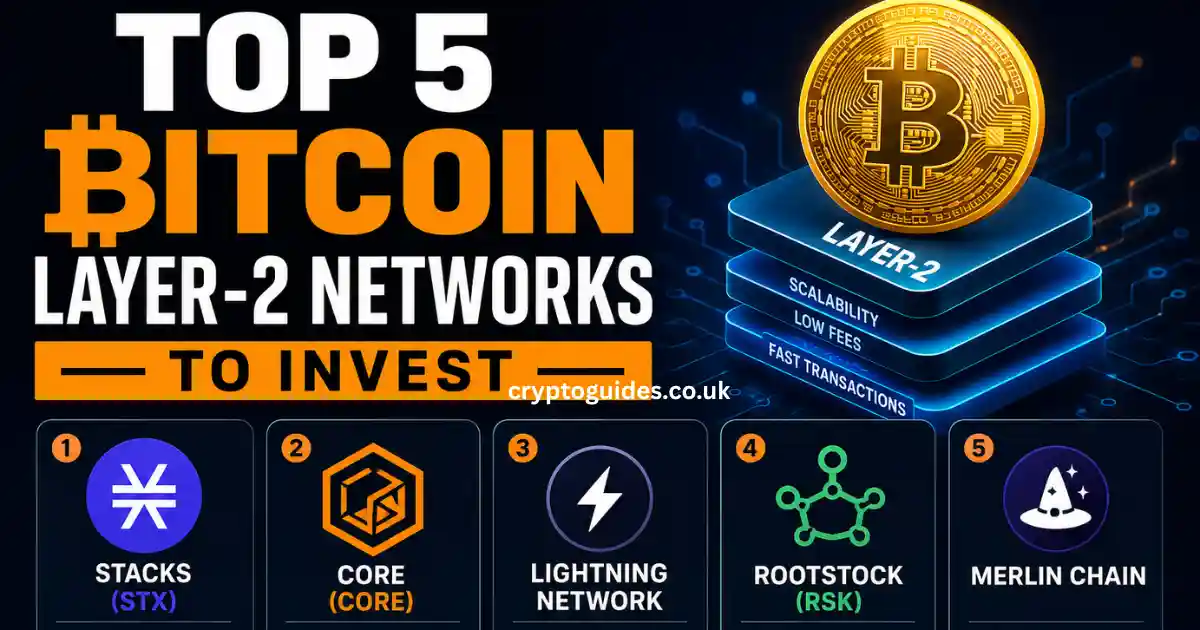
Top 5 Bitcoin Layer-2 Networks to Invest in UK: Complete Guide 2026
Bitcoin Layer-2 networks are built on top of the Bitcoin blockchain. They make Bitcoin faster, cheaper, and smarter. UK investors are now looking at the top five of these networks for serious growth in 2026.
The crypto market is moving fast. Bitcoin Layer-2 projects are creating investment opportunities that most people are still sleeping on. If you’re in the UK and want to get ahead of the curve, this guide is exactly what you need.
This complete guide covers everything — from how these networks work to the best ones to invest in. You’ll learn about Bitcoin scaling solutions, wallets, buying steps, and much more. Let’s dive in.
What Are Bitcoin Layer-2 Networks?
Most people think of Bitcoin as just digital gold. They buy it, hold it, and wait. But here’s the thing — Bitcoin has a serious limitation. It can only process about seven transactions per second. Compare that to Visa, which handles thousands per second. That gap is massive. And that’s exactly where Bitcoin Layer-2 networks come in.
A Bitcoin Layer-2 is a secondary framework built on top of the Bitcoin blockchain. Think of Bitcoin as a busy motorway with only one lane. Layer-2 solutions add extra lanes so traffic moves faster without changing the road itself. These networks handle transactions off the main Bitcoin chain and then settle the final results back on Bitcoin. This keeps Bitcoin’s legendary security intact while making the whole system dramatically faster and cheaper.
Bitcoin Layer-2 coins and projects unlock capabilities that the Bitcoin base layer simply wasn’t designed for. You get smart contracts, decentralised finance, NFTs, and instant payments — all powered by Bitcoin’s rock-solid foundation. The Bitcoin ecosystem is no longer just a store of value. It’s becoming a full financial infrastructure.
Here’s a quick comparison to help you see the difference clearly:
| Feature | Bitcoin Layer-1 | Bitcoin Layer-2 |
|---|---|---|
| Transaction Speed | ~10 minutes per block | Seconds to milliseconds |
| Transaction Fees | High (can spike to $50+) | Very low (often under $0.01) |
| Scalability | Very limited | High |
| Smart Contracts | Limited | Yes (on most Layer-2s) |
| DeFi Support | Minimal | Full BTCFi ecosystems |
| Security | Extremely high | Inherits Bitcoin’s security |
| Use Cases | Store of value, transfers | DeFi, NFTs, payments, dApps |
The five networks covered in this guide — Stacks, Core, Lightning Network, Rootstock, and Merlin Chain — represent the strongest Bitcoin Layer-2 projects available to UK investors right now. Each one brings something different to the table. And each one is worth your attention in 2026.
Why Bitcoin Layer-2 Projects Are Growing Fast in the UK
The United Kingdom has quietly become one of Europe’s most active crypto markets. According to a 2024 FCA survey, roughly 12% of UK adults own or have owned cryptocurrency. That number is climbing every year. And now, a new wave of interest is building around Bitcoin Layer-2 projects — not just Bitcoin itself.
Why is this happening now? Several forces are pushing this growth forward at the same time. First, Bitcoin had its fourth halving in April 2024. Historically, halving events trigger massive bull runs in the 12 to 18 months that follow. That puts 2025 and 2026 right in the sweet spot for Bitcoin Layer-2 coins to surge alongside Bitcoin’s price. When Bitcoin pumps, Layer-2 tokens often outperform because they carry additional utility beyond just being digital gold.
Second, the regulatory picture in the UK is getting clearer. The Financial Conduct Authority (FCA) has been building a structured framework for crypto assets. While it’s not perfect yet, UK investors now have more confidence that Bitcoin Layer-2 projects operate within a legal structure. That clarity attracts both retail and institutional money. Major UK fintech firms are already exploring Bitcoin infrastructure solutions, and that’s a powerful signal for anyone watching market trends.
Third — and this is a big one — Bitcoin DeFi, or BTCFi, is exploding. Ethereum has dominated DeFi for years. But Bitcoin holders have always faced one frustrating problem: their BTC just sits there. They can’t easily earn yield or access DeFi protocols without bridging to another chain. Bitcoin Layer-2 networks solve this problem directly. They let Bitcoin holders participate in lending, staking, and liquidity pools without ever leaving the Bitcoin ecosystem. That unlocks trillions of dollars in dormant Bitcoin capital, and UK investors are waking up to that opportunity fast.
Here are the key growth drivers pushing Bitcoin Layer-2 projects forward in the UK right now:
| Growth Driver | Why It Matters |
|---|---|
| Post-Bitcoin halving cycle | Historically drives token price surges |
| FCA regulatory progress | Builds investor confidence and legal clarity |
| Rising BTCFi demand | Unlocks DeFi on Bitcoin for millions of holders |
| Institutional UK interest | Signals long-term market legitimacy |
| Growing developer activity | More apps mean more utility and demand |
| Ethereum competition | Pushes Bitcoin to scale and innovate faster |
How Bitcoin Layer-2 Networks Work
Understanding how Bitcoin Layer-2 networks work gives you a real edge as an investor. You don’t need to be a developer. You just need to understand the basic mechanics so you can make smarter decisions.
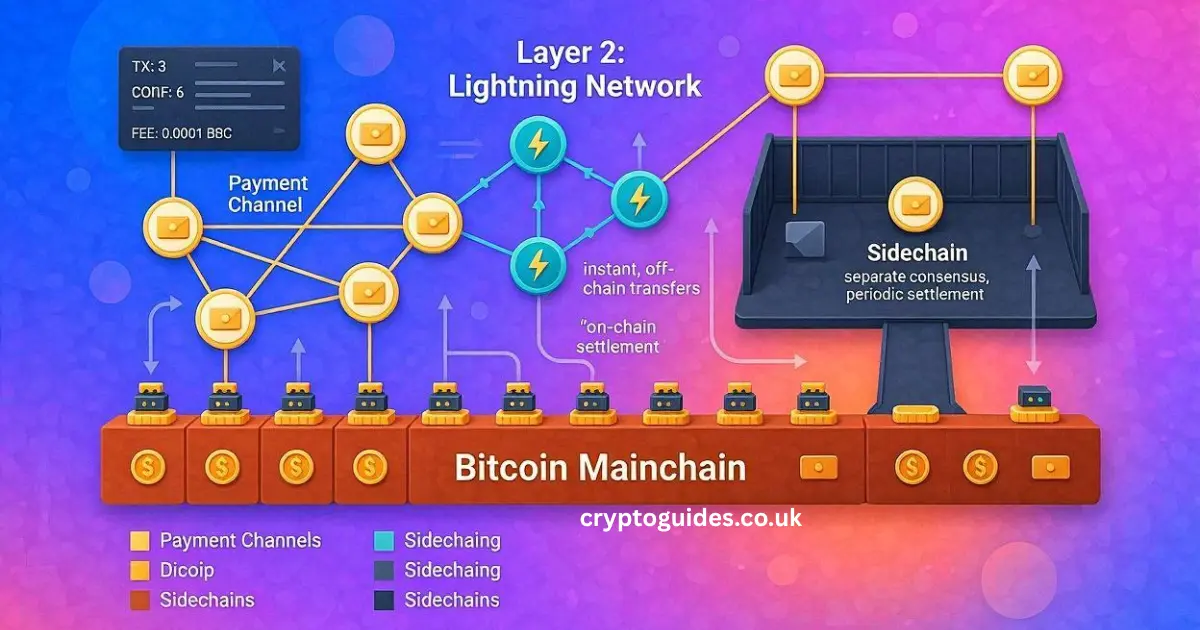
At the core level, Bitcoin Layer-2 solutions move transactions off the main Bitcoin chain. Instead of recording every single transaction on the blockchain — which is slow and expensive — Layer-2 networks batch or process those transactions separately. Once a batch is complete, only the final result gets written back to the Bitcoin main chain. This is what makes them so much faster and cheaper.
Different Layer-2 solutions use different technical approaches. Bitcoin Payment Networks like the Lightning Network use payment channels. Two users open a channel, send transactions back and forth instantly off-chain, and only close the channel when they’re done. At that point, the net result settles on Bitcoin. It’s like running a tab at a bar. You don’t pay for every drink one by one — you settle the whole bill at the end of the night.
Bitcoin Sidechains like Rootstock and Merlin Chain are separate blockchains that run alongside Bitcoin. They have their own consensus rules but stay connected to Bitcoin through a two-way peg. You lock up real BTC on one side and get an equivalent token on the sidechain. This lets you use Bitcoin’s value in a completely different blockchain environment — one that might support smart contracts or faster transactions.
Bitcoin Rollups are a newer and more advanced approach. They bundle hundreds of transactions together, compress them, and post a proof back to Bitcoin. Bitcoin Rollups are what power next-generation Layer-2 networks like Merlin Chain. They combine speed, low cost, and Bitcoin-level security in one package.
Here’s a step-by-step breakdown of how a typical Bitcoin Layer-2 transaction works:
- You initiate a transaction on the Layer-2 network
- The Layer-2 processes it off-chain almost instantly
- Your transaction gets bundled with others into a batch
- The batch result is verified and compressed
- The final proof or summary is posted to the Bitcoin blockchain
- Bitcoin’s proof-of-work security validates and anchors the settlement
Bitcoin Smart Contracts are another key feature that Bitcoin Layer-2 networks unlock. Bitcoin’s base layer has very limited smart contract capability. But Layer-2 networks like Stacks and RSK bring full programmability to the Bitcoin ecosystem. That means developers can build decentralised apps, lending protocols, NFT marketplaces, and much more — all secured by Bitcoin.
Benefits of Investing in Bitcoin Layer-2 Projects
There’s a reason smart investors are paying close attention to Bitcoin Layer-2 projects in 2026. The benefits stack up quickly, and the window of opportunity won’t stay open forever. Let’s break down exactly why these investments are worth serious consideration.
Lower transaction fees are the first and most obvious benefit. The Bitcoin blockchain can get expensive fast — especially during bull markets when network congestion spikes. Layer-2 solutions cut those costs dramatically. Some networks process transactions for fractions of a penny. That matters enormously for traders, DeFi users, and businesses building on the Bitcoin infrastructure.
Faster transactions change everything too. Waiting 10 minutes for a Bitcoin transaction to confirm isn’t practical for everyday payments. Bitcoin Layer-2 networks bring transaction times down to seconds or even milliseconds. The Lightning Network, for example, settles payments almost instantly. This speed makes Bitcoin actually usable as a currency — not just a long-term holding asset.
Access to Bitcoin DeFi — often called BTCFi — is perhaps the most exciting benefit of all. For years, Bitcoin holders watched Ethereum DeFi users earn double-digit yields while their BTC just sat in cold storage. Bitcoin Layer-2 projects fix that. You can now lend your BTC, provide liquidity, earn staking rewards, and access full DeFi protocols — all within the Bitcoin ecosystem. That’s a paradigm shift.
Bitcoin Smart Contracts add programmability to the world’s most trusted blockchain. This unlocks dApps, DAOs, automated financial products, and NFTs all secured by Bitcoin’s unmatched security model. No other chain offers that combination. Ethereum has smart contracts but lacks Bitcoin’s security reputation. Bitcoin now has both, thanks to Layer-2.
Early-mover advantage is real. Best Bitcoin Layer-2 Networks are still relatively undervalued compared to Ethereum Layer-2 projects. Ethereum’s Layer-2 ecosystem — networks like Arbitrum and Optimism — has already attracted billions in investment. Bitcoin’s Layer-2 space is earlier in its growth curve. That means there’s more room to run — and more reward for those who get in ahead of the crowd.
| Benefit | What It Means for You |
|---|---|
| Lower fees | Keep more of your profits on every transaction |
| Faster speed | Near-instant payments and DeFi interactions |
| BTCFi access | Earn yield on Bitcoin without leaving the ecosystem |
| Bitcoin smart contracts | Access dApps backed by Bitcoin’s security |
| Early opportunity | Still undervalued vs Ethereum Layer-2s |
| Bitcoin security | Your assets stay protected by the world’s most secure blockchain |
| Growing ecosystem | More apps and users mean rising token demand |
Risks of Investing in Bitcoin Layer-2 Networks
No honest investment guide skips the risks. Bitcoin Layer-2 networks are exciting, but they carry real challenges that every UK investor must understand before committing any capital. Being informed protects you. Being naive costs you money.
Market volatility is the most obvious risk. Bitcoin Layer-2 coins are crypto assets. They can — and do — drop 50% or more during bear markets. Even the strongest projects experience brutal drawdowns. Stacks (STX), for example, dropped significantly during the 2022 crypto winter before recovering strongly in 2024. If you can’t stomach that kind of short-term pain, position sizing becomes critical. Never invest more than you can genuinely afford to lose.
Regulatory risk is especially relevant in the UK. The FCA has taken an increasingly active stance on crypto regulation. New rules could restrict how UK investors access certain Bitcoin Layer-2 projects or exchanges that list Bitcoin Layer-2 coins. While the direction of UK crypto regulation appears broadly positive, nothing is guaranteed. Any sudden policy shift could impact liquidity and access.
Technology risk is real and often underestimated. Bitcoin Layer-2 networks are complex systems built on cutting-edge code. Smart contracts can contain bugs. Bridges between chains have been exploited for hundreds of millions of dollars in losses across the broader crypto industry. While established networks like RSK and Stacks have strong security track records, newer projects like Merlin Chain carry higher technical risk simply because they have less history.
Liquidity risk affects smaller Bitcoin Layer-2 coins particularly hard. Thin order books mean large price swings on relatively small trades. If you’re trying to exit a large position in a less liquid token, you might face significant slippage or struggle to find buyers at your target price.
Competition risk is also worth taking seriously. Ethereum’s Layer-2 Crypto Projects — Arbitrum, Optimism, Base, and others — are well-funded, well-established, and already commanding massive ecosystems. Bitcoin Layer-2 must fight for developer attention and user adoption against formidable competition. Not every project that exists today will survive the next market cycle.
Here are some practical risk management tips to protect your investment:
| Risk Management Rule | Why It Matters |
|---|---|
| Only invest what you can afford to lose | Crypto markets are unpredictable |
| Diversify across multiple Layer-2 projects | Spread risk across different technologies |
| Use FCA-regulated UK exchanges only | Protects your funds legally |
| Store tokens in self-custody wallets | Removes exchange counterparty risk |
| Stay updated on FCA announcements | Regulatory changes move markets fast |
| Set stop-loss levels on volatile tokens | Limits downside on high-risk positions |
Top 5 Bitcoin Layer-2 Networks to Invest in UK (2026)
Here it is — the main event. After weeks of researching Bitcoin Layer-2 projects, analysing market data, reviewing developer activity, and evaluating UK accessibility, five networks stand out above the rest. These are the best Bitcoin Layer-2 networks for UK investors heading into 2026. Each one was selected based on technology strength, market capitalisation, developer momentum, UK exchange availability, and genuine growth potential.
Before diving into each profile, here’s your quick-reference overview:
| Rank | Network | Token | Primary Use Case | Risk Level | Best For |
|---|---|---|---|---|---|
| 1 | Stacks | STX | Smart Contracts & DeFi | Medium | All investor types |
| 2 | Core | CORE | BTC Staking & BTCFi | Medium | DeFi-focused investors |
| 3 | Lightning Network | BTC | Fast Bitcoin Payments | Low-Medium | Conservative investors |
| 4 | Rootstock | RBTC | Ethereum-Style DeFi | Medium | Experienced DeFi users |
| 5 | Merlin Chain | MERLIN | Fast Ecosystem Growth | High | Risk-tolerant investors |
Stacks (STX): The Leading Smart Contract Layer for Bitcoin
Stacks is arguably the most mature and well-developed Bitcoin Layer-2 smart contract platform in existence. Founded in 2013 and launched as a public network in 2021, Stacks has built one of the strongest developer communities in the entire Bitcoin ecosystem. It brings full Bitcoin Smart Contracts to life through its unique programming language called Clarity — a language specifically designed for security and predictability.
What makes Stacks genuinely different from other Bitcoin Layer-2 projects is its Proof of Transfer (PoX) consensus mechanism. Here’s how it works in simple terms: miners on Stacks spend real Bitcoin to mine new STX blocks. Those spent Bitcoins don’t disappear — they flow directly to STX holders who participate in “Stacking” (Stacks’ version of staking). This means STX holders earn actual Bitcoin as a reward. Not wrapped Bitcoin. Not synthetic Bitcoin. Real BTC sent directly to your wallet. That’s a remarkable and underappreciated feature.
Every Stacks transaction settles on the Bitcoin blockchain. This creates a direct, verifiable connection between Stacks and Bitcoin. The Bitcoin blockchain validates Stacks’ history. That’s a level of security that most Bitcoin Sidechains and even many Ethereum Layer-2 networks can’t match.
The Stacks ecosystem in 2025 and 2026 has grown substantially. Major milestones include the Nakamoto Upgrade — a significant technical improvement that makes Stacks transactions settle every Bitcoin block (roughly every 10 minutes) rather than waiting longer periods. This dramatically improves the user experience for Bitcoin DeFi applications built on Stacks. Notable dApps include Alex (a leading BTCFi exchange), Arkadiko (a decentralised lending protocol), and Gamma (an NFT marketplace for Bitcoin Ordinals).
Key Stacks (STX) Facts:
| Data Point | Detail |
|---|---|
| Founded | 2013 (launched 2021) |
| Consensus | Proof of Transfer (PoX) |
| Settlement | Every Bitcoin block |
| Stacking Reward | Paid in real BTC |
| Key dApps | Alex, Arkadiko, Gamma |
| Available in UK | Coinbase, Kraken, OKX |
| Risk Level | Medium |
As a former Stacks investor and analyst wrote on X in 2024: “STX is the only Layer-2 where you earn Bitcoin just for holding the token. That alone makes it worth understanding.” For UK investors looking for a balanced entry into Bitcoin Layer-2 coins, Stacks is the natural starting point.
Core (CORE): Expanding Bitcoin DeFi Opportunities
Core is one of the newest and most innovative Bitcoin Layer-2 projects to gain serious traction. Launched in 2023, Core blockchain introduces a groundbreaking concept called Satoshi Plus — a hybrid consensus mechanism that combines Bitcoin’s proof-of-work security with delegated proof-of-stake. In plain English, Bitcoin miners help secure the Core network as part of their regular mining activity. That’s a brilliant design because it aligns Core’s security with Bitcoin’s without requiring miners to do any extra work.
What really sets Core apart in the Bitcoin ecosystem is its dual staking model. Bitcoin holders can lock up their BTC in a time-locked transaction and delegate it to Core validators. In return, they earn CORE token rewards. Meanwhile, CORE token holders stake on the network and earn additional BTC yield from the protocol. This creates a circular incentive system where both BTC and CORE holders benefit from the network’s growth — and that’s exactly the kind of mechanic that drives long-term demand for Bitcoin Layer-2 coins.
Core’s Bitcoin DeFi — or BTCFi — ecosystem is growing fast. The flagship product is coreBTC, a decentralised Bitcoin-backed synthetic asset that lets you use Bitcoin’s value within Core’s smart contract environment without trusting a central custodian. This is fundamentally different from wrapped Bitcoin products that rely on centralised bridges. Core’s approach is more secure, more transparent, and more aligned with Bitcoin’s ethos.
By early 2025, Core had attracted over $1 billion in total value locked (TVL), making it one of the fastest-growing Bitcoin Layer-2 projects in history. That growth reflects genuine user demand — not just speculative hype. Lending protocols, decentralised exchanges, and yield farming platforms are all actively building on Core’s infrastructure.
Key Core (CORE) Facts:
| Data Point | Detail |
|---|---|
| Launched | 2023 |
| Consensus | Satoshi Plus (hybrid PoW + DPoS) |
| Unique Feature | Dual BTC + CORE staking |
| BTC Staking APY | Variable (typically 5–10%) |
| TVL (early 2025) | Over $1 billion |
| Available in UK | Binance, OKX, Gate.io |
| Risk Level | Medium |
For UK investors who want real Bitcoin DeFi exposure without fully abandoning Bitcoin’s safety, Core offers a compelling and increasingly proven pathway into BTCFi.
Lightning Network: The Fastest Bitcoin Payment Layer
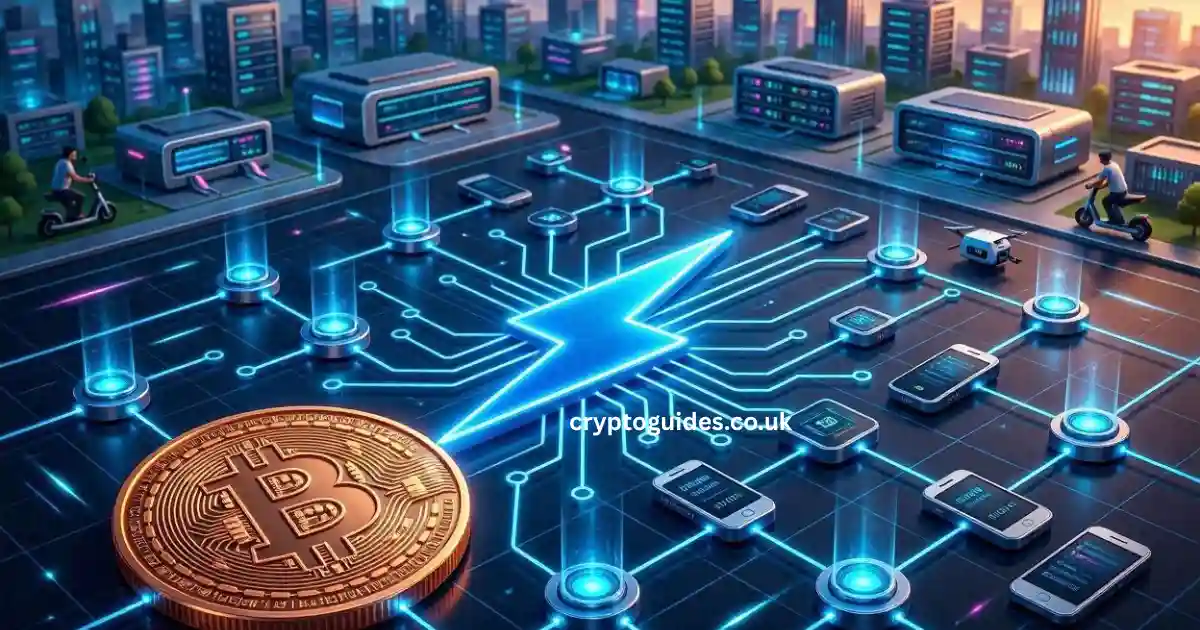
The Lightning Network is the oldest and most battle-tested Bitcoin Layer-2 solution in existence. First proposed in a 2015 whitepaper by Joseph Poon and Thaddeus Dryja, Lightning has been running in production since 2018. It’s not a speculative project — it’s a working Bitcoin Payment Network that processes millions of transactions every day around the world.
The Lightning Network works through payment channels. Two parties open a channel by locking some Bitcoin into a shared wallet on the main Bitcoin chain. From that point on, they can send Bitcoin back and forth between each other instantly and for near-zero fees. When they’re done, they close the channel and the net result settles on-chain. The genius of the system is that you don’t need a direct channel with every person you want to pay. Lightning routes payments through a network of channels, finding paths automatically — much like how internet data finds its own route from your computer to a website.
Real-world Lightning adoption has exploded. El Salvador made Bitcoin legal tender in 2021 and built its Chivo wallet entirely on Lightning. Strike, one of the most popular Lightning-native apps, has expanded internationally. Major payment processors including Bitrefill and Moon accept Lightning payments. Thousands of businesses worldwide — from coffee shops to online retailers — now accept Bitcoin payments through Lightning.
For UK investors, Lightning represents a lower-risk entry point into the Bitcoin Layer-2 space. You’re not buying a separate token — you’re using and investing in Bitcoin itself. Running a Lightning node lets you earn small routing fees paid in Bitcoin. It’s not a get-rich-quick strategy, but it’s a steady, low-risk way to participate in the Bitcoin infrastructure economy. Apps like Amboss, Zeus, and Breez make it straightforward even for non-technical users.
Key Lightning Network Facts:
| Data Point | Detail |
|---|---|
| Launched | 2018 (mainnet) |
| Technology | Payment Channels |
| Transaction Speed | Milliseconds |
| Average Fee | Less than $0.01 |
| Network Capacity | 5,000+ BTC locked |
| Active Nodes | 15,000+ globally |
| Investment Angle | BTC exposure + node routing fees |
The Lightning Network proves that Bitcoin scaling solutions don’t have to be complex or speculative to be valuable. Sometimes the simplest, most tested solution is also the best one.
Rootstock (RSK): Bringing Ethereum-Style Smart Contracts to Bitcoin
Rootstock — commonly known as RSK — is one of the most technically sophisticated Bitcoin Sidechains ever built. Launched in 2018 by IOVlabs, RSK brings full Ethereum Virtual Machine (EVM) compatibility to the Bitcoin ecosystem. In plain terms, any smart contract or dApp built for Ethereum can be deployed on RSK with minimal changes. That’s a massive advantage because there are thousands of Ethereum developers who can now build on Bitcoin without learning a new programming language.
RSK uses a process called merge mining. Bitcoin miners secure the RSK network at the same time they mine Bitcoin — no extra energy required. Roughly 50–60% of Bitcoin’s total hashrate secures RSK at any given time. That makes RSK one of the most secure Bitcoin Layer-2 networks in existence. It’s backed by more computational power than almost any other blockchain in the world.
The native currency of RSK is RBTC — Smart Bitcoin. RBTC is pegged 1:1 to Bitcoin through a two-way peg mechanism. You lock real BTC on the Bitcoin side and receive an equal amount of RBTC on RSK. You can use that RBTC in DeFi protocols, smart contracts, and dApps — then convert back to BTC whenever you want. This peg mechanism is secured by a federation of reputable organisations, adding a layer of institutional trust.
RSK’s Bitcoin DeFi ecosystem includes some genuinely impressive projects. Sovryn is the flagship — a fully decentralised Bitcoin-native trading and lending platform that lets you borrow against your BTC, trade perpetual contracts, and earn yield. Money on Chain offers stablecoin products backed by Bitcoin. Tropykus provides microfinance services to Latin American users entirely on Bitcoin through RSK. These aren’t just experiments — they’re functioning financial products with real users and real capital.
Key RSK (Rootstock) Facts:
| Data Point | Detail |
|---|---|
| Launched | 2018 |
| Technology | EVM-compatible sidechain |
| Security | Merge mining (~50% BTC hashrate) |
| Native Token | RBTC (1:1 BTC peg) |
| Key dApps | Sovryn, Money on Chain, Tropykus |
| Developer Access | Any Ethereum developer |
| Risk Level | Medium |
For UK investors with an Ethereum background who want to move into Bitcoin infrastructure, RSK is the most natural bridge. You get familiar technology, Bitcoin-level security, and access to a growing Bitcoin DeFi ecosystem.
Merlin Chain: A Fast-Growing Bitcoin Layer-2 Ecosystem
Merlin Chain is the newest and most high-octane Bitcoin Layer-2 on this list. Launched in early 2024, Merlin exploded onto the scene with remarkable speed. Within weeks of launch, it attracted over $1 billion in TVL — a pace that even surprised seasoned Bitcoin ecosystem observers. Merlin uses ZK-rollup technology, which is considered the gold standard for Bitcoin Rollups because it offers both speed and cryptographic security proofs.
Bitcoin Rollups like Merlin compress transaction data using advanced cryptography. Instead of storing every transaction detail on Bitcoin, Merlin posts a small cryptographic proof that mathematically proves thousands of transactions happened correctly. This makes Merlin extraordinarily fast and cheap while remaining anchored to the Bitcoin blockchain for final security. The result is a network that can handle DeFi, gaming, NFTs, and complex financial applications at speeds the Bitcoin base layer could never achieve.
What sets Merlin apart from older Bitcoin Layer-2 projects is its native Bitcoin asset support. Merlin natively supports Bitcoin Ordinals, BRC-20 tokens, and Runes — the newest Bitcoin token standards that emerged from the Ordinals revolution. This makes Merlin a hub for Bitcoin-native digital assets. Artists, developers, and traders who operate in the Bitcoin Ordinals space naturally gravitate toward Merlin because it speaks their language.
The MERLIN token serves as the network’s gas and governance token. Holders can stake MERLIN to earn rewards and participate in network governance decisions. The staking program launched with attractive yields, drawing significant capital into the ecosystem early. However — and this is important for UK investors to understand — Merlin carries the highest risk on this list. It’s newer, less tested, and more speculative than Stacks or RSK. The reward potential is higher, but so is the chance of significant losses.
Key Merlin Chain Facts:
| Data Point | Detail |
|---|---|
| Launched | Early 2024 |
| Technology | ZK-Rollups |
| TVL at Peak | Over $1 billion |
| Supported Assets | BTC, Ordinals, BRC-20, Runes |
| Native Token | MERLIN |
| Exchange Access | Binance, OKX, Gate.io |
| Risk Level | High |
“Merlin Chain represents the new generation of Bitcoin Layer-2 — fast, Bitcoin-native, and built for the Ordinals era. But high reward always comes with high risk.” — Crypto analyst, Bitcoin Magazine, 2024
For UK investors willing to accept higher volatility in exchange for potentially higher returns, Merlin Chain is the most exciting speculative play in the Bitcoin Layer-2 space right now.
How to Buy Bitcoin Layer-2 Coins in the UK
Buying Bitcoin Layer-2 coins in the UK is straightforward if you follow the right steps. The good news is that several major exchanges are either FCA-registered or actively serving UK customers within the regulatory framework. Here’s a clear, step-by-step guide to getting started:
Step 1 — Choose a reliable UK-friendly exchange. Look for platforms that are either FCA-registered or have a strong compliance track record in the UK. The best options right now are Coinbase (FCA registered), Kraken (strong UK presence and compliance), OKX (growing UK user base), and Binance (check current FCA status before using).
Step 2 — Complete your KYC verification. All regulated UK exchanges require Know Your Customer checks. You’ll need to submit a government-issued photo ID (passport or driving licence) and proof of address (a recent bank statement or utility bill). This typically takes between 30 minutes and 24 hours.
Step 3 — Deposit GBP. Most UK exchanges accept bank transfers via Faster Payments, CHAPS, or SEPA. Some also accept debit card deposits, though fees are often slightly higher on cards. Bank transfers are generally the cheapest method.
Step 4 — Search for your chosen token. Use the exchange’s search function to find STX (Stacks), CORE (Core), RBTC (Rootstock), or MERLIN (Merlin Chain). Lightning Network doesn’t have a separate token — you access it through BTC-enabled Lightning wallets.
Step 5 — Place your buy order. For beginners, a market order is simplest — it buys immediately at the current price. More experienced investors might use a limit order to target a specific entry price.
Step 6 — Withdraw to your personal wallet. This is non-negotiable. Never leave large holdings on an exchange. Always withdraw your Bitcoin Layer-2 coins to a personal wallet where you control the private keys.
Here’s a quick fee comparison across major UK-accessible exchanges:
| Exchange | GBP Deposit Method | Typical Trading Fee | FCA Status | Supports STX | Supports CORE |
|---|---|---|---|---|---|
| Coinbase | Bank Transfer, Card | 0.5–1.5% | FCA Registered | Yes | No |
| Kraken | Bank Transfer, Card | 0.16–0.26% | FCA Compliant | Yes | No |
| OKX | Bank Transfer | 0.1% maker/taker | FCA Compliant | Yes | Yes |
| Binance | Bank Transfer, Card | 0.1% | Check current status | Yes | Yes |
| Gate.io | Bank Transfer | 0.1–0.2% | Available to UK users | Yes | Yes |
Best Crypto Wallets for Bitcoin Layer-2 Tokens
Choosing the right wallet for your Bitcoin Layer-2 coins is just as important as choosing the right investment. The wrong wallet choice can mean losing access to your tokens permanently. Here’s everything UK investors need to know.
Different Bitcoin Layer-2 networks require different wallets because they operate on different technical standards. Stacks tokens need a Stacks-compatible wallet. RSK tokens need an EVM-compatible wallet. Merlin Chain also uses EVM standards. The Lightning Network needs a Lightning-enabled Bitcoin wallet. Let’s break them down clearly.
Hot Wallets (Software-Based — Convenient for Active Users):
Leather Wallet (formerly Hiro Wallet) is the gold standard for Stacks users. It supports STX, Bitcoin, and Bitcoin Ordinals. It’s browser-based and integrates directly with all major Stacks dApps like Alex and Arkadiko. If you’re investing in STX, this is your primary wallet.
Xverse Wallet is another excellent option for the Bitcoin ecosystem. It supports Bitcoin, STX, Ordinals, BRC-20 tokens, and Runes — making it perfect for users who want to engage with the broader Bitcoin infrastructure including Merlin Chain’s native asset ecosystem.
MetaMask is the standard wallet for EVM-compatible chains. Since RSK is EVM-compatible, MetaMask works perfectly for Rootstock users. You simply add RSK’s network details to MetaMask and you’re ready to interact with Sovryn and other RSK dApps. MetaMask also works with Merlin Chain.
Trust Wallet offers multi-chain support and is one of the most widely used mobile crypto wallets globally. It supports most major Bitcoin Layer-2 coins and offers a clean, easy-to-use interface for beginners.
Cold Wallets (Hardware-Based — Most Secure for Long-Term Holders):
Ledger Nano X is the top pick for serious Bitcoin Layer-2 investors. It supports Bitcoin, STX, EVM-compatible chains (RSK, Merlin), and connects to MetaMask for DeFi interactions. If you’re holding significant value in Bitcoin Layer-2 coins, a Ledger is worth every penny.
Trezor Model T is the other major hardware wallet option. It supports Bitcoin and a broad range of crypto assets. Combined with MetaMask, it covers most Bitcoin Layer-2 networks available to UK investors.
| Wallet | Type | Supports | Best For | Price |
|---|---|---|---|---|
| Leather Wallet | Hot (Browser) | STX, BTC, Ordinals | Stacks/BTCFi users | Free |
| Xverse Wallet | Hot (Mobile/Browser) | BTC, STX, BRC-20, Runes | Bitcoin ecosystem users | Free |
| MetaMask | Hot (Browser/Mobile) | RSK, Merlin, EVM chains | DeFi users | Free |
| Trust Wallet | Hot (Mobile) | Multi-chain | Beginners | Free |
| Ledger Nano X | Cold (Hardware) | BTC, STX, EVM chains | Long-term holders | ~£149 |
| Trezor Model T | Cold (Hardware) | BTC, multi-chain | Security-focused users | ~£179 |
One final and critical reminder: always write down your seed phrase on paper and store it somewhere physically secure. Never photograph it or store it digitally. Your seed phrase is the master key to your Bitcoin Layer-2 coins. Lose it, and nobody — not even the wallet company — can recover your funds.
Frequently Asked Questions About Bitcoin Layer-2 Networks
Q1: What is the best Bitcoin Layer-2 network to invest in for 2026?
For most UK investors, Stacks (STX) and Core (CORE) represent the strongest combination of technology, ecosystem maturity, and growth potential in 2026. STX offers direct Bitcoin yield through Stacking, while Core unlocks BTCFi opportunities for Bitcoin holders. If you’re more risk-tolerant, Merlin Chain adds high-growth upside to the mix. The best approach is to diversify across two or three best Bitcoin Layer-2 networks rather than concentrating everything in one.
Q2: Are Bitcoin Layer-2 investments legal in the UK?
Yes — investing in Bitcoin Layer-2 coins is legal in the UK. However, the FCA requires any UK-serving crypto exchange to be registered and compliant. Always use FCA-registered or compliant platforms. UK investors must also declare crypto gains for Capital Gains Tax purposes. Speak to a tax adviser familiar with crypto if you’re unsure about your reporting obligations.
Q3: How much should I invest in Bitcoin Layer-2 projects?
There’s no universal answer because it depends entirely on your financial situation, risk tolerance, and investment goals. A general principle used by many crypto investors is allocating no more than 5–10% of total investable assets to high-risk assets like Bitcoin Layer-2 coins. Within that allocation, spreading across multiple Bitcoin Layer-2 projects reduces single-asset risk.
Q4: Can I earn passive income from Bitcoin Layer-2 networks?
Absolutely. Stacks lets you Stack STX tokens to earn real BTC rewards. Core allows you to stake BTC and earn CORE tokens. RSK users can provide liquidity on Sovryn to earn trading fees. Lightning Network node operators earn routing fees in Bitcoin. BTCFi is making passive income on Bitcoin genuinely accessible for the first time.
Q5: Is the Lightning Network a good investment for UK users?
Lightning is best viewed as a Bitcoin infrastructure investment rather than a token speculation play. You don’t buy a separate Lightning token — you use BTC. Running a Lightning node earns you routing fees in Bitcoin. For conservative investors who want Bitcoin Layer-2 exposure without altcoin risk, Lightning is an excellent fit.
Q6: What’s the difference between Bitcoin Layer-2 and Ethereum Layer-2?
Both solve the same fundamental problem — making their base layer faster and cheaper. But they sit on different foundations. Ethereum Layer-2 Crypto Projects like Arbitrum and Optimism are secured by Ethereum’s proof-of-stake consensus. Bitcoin Layer-2 networks inherit Bitcoin’s proof-of-work security — the most battle-tested consensus mechanism in crypto history. Many investors consider Bitcoin’s security model superior, which gives Bitcoin Layer-2 projects a compelling long-term argument.
Q7: Which UK exchanges list Bitcoin Layer-2 tokens?
Coinbase and Kraken both list STX and are FCA-registered in the UK. OKX and Gate.io list a broader range of Bitcoin Layer-2 coins including CORE and MERLIN. Always verify a token’s availability and the exchange’s current UK regulatory status before depositing funds.
Q8: Are Bitcoin Layer-2 networks safe?
The established Bitcoin Layer-2 networks — Lightning, Stacks, and RSK — have strong security track records built over multiple years. Newer networks like Merlin Chain carry more risk simply due to less time in production. No crypto system is completely without risk. Smart contract bugs, bridge exploits, and network attacks are all real possibilities. Using reputable wallets, reputable exchanges, and diversifying across multiple Bitcoin Layer-2 projects significantly reduces your exposure to any single point of failure.
Final Thoughts: Which Top 5 Bitcoin Layer-2 Networks to Invest in UK: Complete Guide 2026
Bitcoin Layer-2 networks are built on top of the Bitcoin blockchain. They make Bitcoin faster, cheaper, and smarter. UK investors are now looking at the top five of these networks for serious growth in 2026.
The crypto market is moving fast. Bitcoin Layer-2 projects are creating investment opportunities that most people are still sleeping on. If you’re in the UK and want to get ahead of the curve, this guide is exactly what you need.
This complete guide covers everything — from how these networks work to the best ones to invest in. You’ll learn about Bitcoin scaling solutions, wallets, buying steps, and much more. Let’s dive in.

I am an SEO and Guest Posting expert with 5+ years of professional experience in building high-authority backlinks, strategic outreach, and scalable SEO campaigns, especially in the Crypto and Blockchain industry. Passionate about helping brands achieve sustainable organic growth, I specialize in guest posting, white-hat authority link building, content outreach, and digital PR strategies that enhance online credibility and search engine performance. Over the years, I have collaborated with international clients and global brands, delivering result-driven SEO solutions and placements on high-authority, high-DR websites focused on increasing organic traffic, domain authority, and online visibility in competitive markets.