Web3 Gaming Crypto: The $10K/Month Strategy Most Players Are Ignoring in 2026
Web3 gaming crypto is a new way to play games online. Players can earn actual cash while gaming It uses blockchain technology to make gaming fair and open.
Getting paid just for playing your favorite games. Real players are earning hundreds of dollars every month. You could be next if you know how it works.
Web3 games let players own their in-game items as digital assets. These items can be sold for real crypto money. More than 10 million players worldwide are already doing this tod
Web3 Games: Top Play-to-Earn, Blockchain, and Crypto Gaming Trends
Most people still think gaming is just a hobby. They’re wrong. Right now, thousands of everyday Americans are turning their screen time into serious income and the secret weapon is web3 gaming crypto. This isn’t some far-fetched dream. It’s a real, growing economy built on blockchain technology, digital ownership, and smart tokenomics. And in 2026, the opportunity has never been bigger.
Think about it this way. Traditional games like Fortnite or Call of Duty let you spend money inside the game. You buy skins, weapons, and upgrades. But when you quit playing, all that money vanishes. Web3 games flip this completely. Every item you earn, every token you collect, and every NFT you own you actually own it. You can sell it, trade it, or hold it as an investment. That’s the core promise of blockchain gaming, and it’s changing everything.
The global web3 gaming crypto market crossed $65 billion in 2025. Analysts expect it to hit $130 billion by 2028. In the USA alone, over 4 million active players are already earning real crypto through games every single month. Some are making a few hundred dollars. Others the ones using the strategy this article reveals are pulling in $10,000 or more every month. The gap between them isn’t luck. It’s knowledge.
List of Web3 Games
The web3 games list keeps growing every month. New titles launch constantly, each promising better graphics, deeper gameplay, and stronger earning potential. But not all web3 games are worth your time. Some are poorly designed. Others are outright scams. Knowing which games belong in your rotation is the first step toward building a real income strategy in web3 gaming crypto.
Here’s a snapshot of the most relevant games dominating the space in 2026:
| Game | Blockchain | Token | Monthly Earning Potential | Platform |
|---|---|---|---|---|
| Axie Infinity | Ronin | AXS / SLP | $200 — $2,000 | PC / Mobile |
| Splinterlands | Hive | SPS / DEC | $150 — $1,500 | PC / Browser |
| Pixels | Ronin | PIXEL | $300 — $3,000 | PC / Browser |
| Alien Worlds | WAX / BNB | TLM | $100 — $800 | PC / Browser |
| Hamster Kombat | TON | HMSTR | $50 — $500 | Mobile |
| Guild of Guardians | Immutable X | GOG | $200 — $1,800 | Mobile |
| Upland | EOS | UPX | $100 — $1,200 | Mobile / PC |
| Gods Unchained | Immutable X | GODS | $150 — $1,400 | PC |
Every game above has a functioning token economy. Every single one lets you earn real crypto rewards for gamers without needing to be a developer or a tech genius. You just need to understand how each game’s economy works — and this article walks you through exactly that.
Filter Your Search
Finding the right play-to-earn games for your situation isn’t about picking the most popular option. It’s about matching a game to your budget, your schedule, and your risk tolerance. A college student with two hours a day has completely different needs than a retired professional with $5,000 to invest in tokenized gaming assets.
Start by filtering games across four dimensions. First, consider your platform. Are you playing on Android, iOS, or PC? Some games only run smoothly on desktop. Others are designed for mobile-first experiences. Second, think about your entry cost. Free-to-play games like Alien Worlds let you start with zero investment.
Pay-to-earn games like Axie Infinity require you to buy NFTs before you can start earning. Third, evaluate the blockchain network. Ethereum-based games have higher gas fees. Games on Solana, WAX, or Ronin cost almost nothing per transaction. Fourth, study the earning model. Token farming games reward daily activity. NFT games reward smart buying and selling. Guild-based games reward teamwork and coordination.
Here’s a quick filter guide:
| Your Situation | Best Filter | Recommended Games |
|---|---|---|
| Zero budget | Free-to-play | Alien Worlds, Hamster Kombat |
| Mobile only | Android/iOS | Hamster Kombat, Guild of Guardians |
| $100–$500 budget | Low entry NFT games | Splinterlands, Gods Unchained |
| $500+ budget | High-yield P2E | Pixels, Axie Infinity |
| PC preferred | Browser/desktop | Splinterlands, Alien Worlds, Pixels |
Don’t skip this filtering step. Choosing the wrong game wastes months of time and potentially thousands of dollars. The players earning $10K/month didn’t stumble into the right game by accident they filtered deliberately and entered with a clear strategy.
Popular Play-to-Earn Games
Play-to-earn games are the backbone of the entire web3 gaming crypto ecosystem. These are games where your skill, time, and strategy translate directly into digital assets with real monetary value. The best ones have active communities, transparent tokenomics, and consistent development teams pushing regular updates.
Axie Infinity sparked the entire P2E revolution back in 2021. Even in 2026, it remains one of the most recognizable names in blockchain gaming. Players breed and battle creatures called Axies. Each Axie is an in-game NFT with unique traits that affect its battle performance and market value. The scholarship program where NFT owners lend their Axies to players who can’t afford entry created an entirely new income-sharing model that reshaped how people think about web3 game investment.
Pixels is arguably the hottest play-to-earn game of 2026. It’s a farming and social simulation game built on the Ronin blockchain. Players own land, grow crops, craft items, and trade resources all with real economic value. What makes Pixels special is its accessibility. You don’t need a massive budget to start. And the PIXEL token has shown remarkable stability compared to other crypto gaming tokens, making it a favorite among risk-conscious players.
Top Gaming Dapps
A gaming DAO isn’t just a buzzword. Decentralized applications Dapps are the actual infrastructure powering the best web3 games. Unlike traditional game servers owned by corporations, gaming Dapps run on blockchains. No single company controls them. That means no sudden shutdowns, no unfair rule changes, and no confiscated assets.
DappRadar tracks all major gaming Dapps globally. As of mid-2026, the top gaming Dapps by daily active users include Alien Worlds, Splinterlands, Pixels, and Axie Infinity. These platforms collectively process millions of transactions every day representing real money changing hands between real players in the crypto game economy.
Web3 Games by Platform
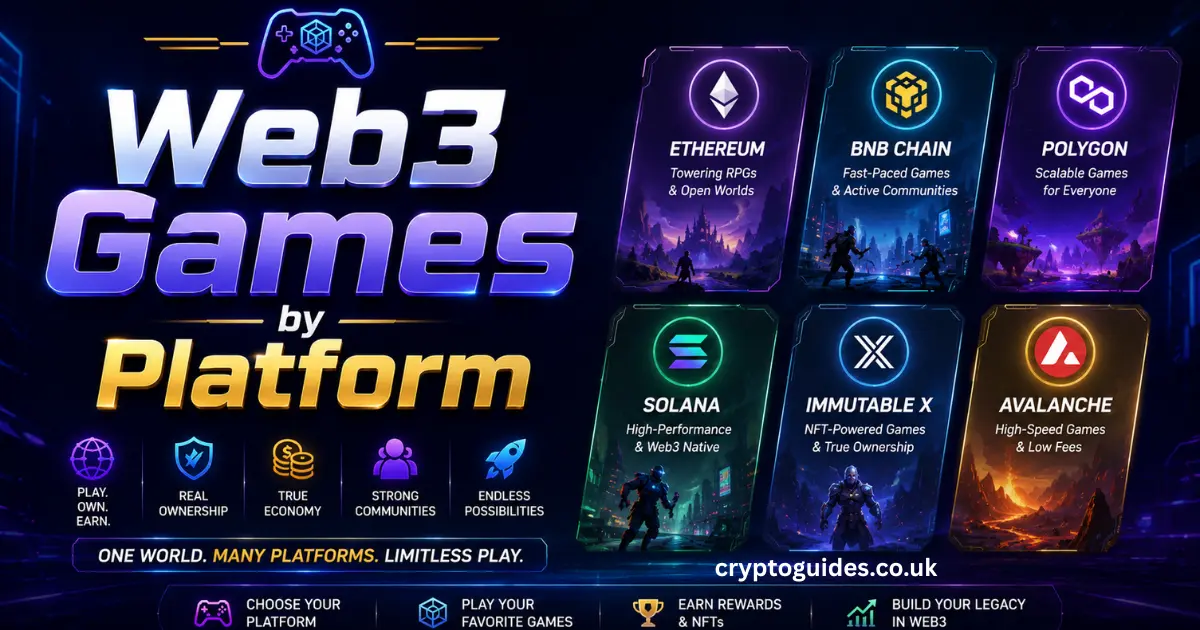
Platform choice is a strategic decision, not a personal preference. The platform you use determines which games you can access, how fast transactions process, and ultimately how much you can earn. Serious web3 gaming crypto earners often play across multiple platforms simultaneously to diversify their income streams.
Web3 Games for Android
Android dominates mobile gaming worldwide, and web3 games for Android have exploded in variety and quality throughout 2025 and 2026. Games like Hamster Kombat, Guild of Guardians, and Alien Worlds all offer smooth Android experiences. Setting up your earning stack on Android requires three things: a compatible crypto wallet (MetaMask Mobile or Trust Wallet work great), a reliable internet connection, and an understanding of which games offer the best crypto rewards for gamers on mobile.
One underrated advantage of Android web3 gaming is flexibility. You can farm tokens during your lunch break, manage your NFT inventory on the bus, and claim daily rewards from your couch. P2E gaming on Android has genuinely made earning crypto accessible to anyone with a smartphone which, in 2026, is pretty much everyone.
Web3 Games for iOS
iOS players face unique challenges in the web3 gaming crypto world. Apple’s App Store policies historically restricted blockchain gaming apps from offering direct crypto transactions within the app. However, 2025 saw a significant policy shift following regulatory pressure, and several major web3 games now offer full iOS functionality. Axie Infinity, Pixels, and Gods Unchained all have iOS-compatible interfaces in 2026.
The workaround that smart iOS players have used for years is browser-based gameplay. Games like Splinterlands and Alien Worlds run entirely in your mobile browser. No App Store approval needed. No restrictions on virtual asset trading or token withdrawals. Just open Safari or Chrome, connect your wallet, and start playing.
PC Web3 Games
If you’re serious about maximizing your web3 gaming crypto earnings, PC is your best friend. Desktop gaming offers superior processing power, larger screen real estate, and faster transaction signing. PC players consistently outperform mobile players in token farming efficiency simply because they can manage more actions per hour.
Games like Splinterlands, Gods Unchained, and Pixels were fundamentally designed for PC. Their interfaces are rich with data, trading tools, and strategic layers that genuinely reward dedicated desktop players. Several top earners in the USA run multiple browser windows simultaneously managing three or four games at once to stack crypto rewards for gamers across different platforms in parallel.
Top Web3 Games & Blockchain Gaming Trends
The blockchain gaming industry isn’t just growing it’s transforming. In 2026, the lines between gaming, finance, and the metaverse gaming experience have blurred almost completely. What started as a niche experiment in 2020 is now a mainstream financial movement attracting institutional investors, AAA game developers, and millions of everyday players across the USA.
According to DappRadar’s 2026 Gaming Report, blockchain gaming now accounts for 52% of all active blockchain wallet activity globally. That’s more than DeFi. More than NFT art. More than any other blockchain use case. The money flowing through web3 gaming crypto ecosystems is enormous and most casual observers haven’t caught on yet.
Platform Leaderboard
| Rank | Platform | Daily Active Users | Primary Token | Blockchain |
|---|---|---|---|---|
| 1 | Alien Worlds | 580,000+ | TLM | WAX / BNB |
| 2 | Splinterlands | 310,000+ | SPS / DEC | Hive |
| 3 | Pixels | 275,000+ | PIXEL | Ronin |
| 4 | Axie Infinity | 190,000+ | AXS / SLP | Ronin |
| 5 | Gods Unchained | 145,000+ | GODS | Immutable X |
| 6 | Guild of Guardians | 120,000+ | GOG | Immutable X |
| 7 | Upland | 95,000+ | UPX | EOS |
These numbers represent real people making real transactions every single day. Each daily active user is either earning, spending, or trading crypto gaming tokens contributing to a live, breathing crypto game economy that never sleeps.
New Platforms
The crypto game launch calendar for 2026 is packed. Several highly anticipated titles are either launching or reaching full release this year, each backed by serious funding and development teams with track records. Shrapnel a first-person shooter built on Avalanche promises AAA graphics with genuine P2E gaming mechanics. BigTime, an RPG adventure game, has attracted over 800,000 wishlist signups ahead of its full token economy launch. Parallel, a sci-fi card game, has already generated over $100 million in NFT marketplace for games trading volume before full release.
Getting into these platforms early is where the biggest gains happen. Early players receive gaming token airdrops, better NFT pricing, and community reputation that pays dividends for years. The smart move is following crypto gaming news 2026 sources like DappRadar, CoinGecko Gaming, and Decrypt to catch launch announcements before the crowd arrives.
Best Offers
New player offers in web3 gaming aren’t just marketing gimmicks. Many represent genuine financial opportunities. Splinterlands regularly offers starter packs that include NFT cards worth more than the pack price on the open market. Several platforms distribute gaming token airdrops to early adopters free tokens that can appreciate significantly once the game gains traction. Gods Unchained gives new players free card packs simply for completing tutorial missions. These aren’t charity — they’re user acquisition costs that players can convert directly into earnings.
The golden rule for maximizing offers is simple: never pay more to enter a game than you’ve researched the earning potential to justify. Always verify offers through official game websites and trusted crypto gaming news 2026 outlets before connecting your wallet.
Latest Articles in Web3 Gaming
Staying current in web3 gaming crypto isn’t optional it’s a core part of your earning strategy. Token prices shift weekly. New games launch monthly. Regulatory changes in the USA can affect which platforms are legally accessible and how earnings get taxed. The players consistently earning $10K/month aren’t just good at games they’re information consumers who stay ahead of the curve.
The most important story of early 2026 in crypto gaming news 2026 is the SEC’s updated guidance on gaming tokens. Following years of ambiguity, the SEC clarified that utility tokens used primarily within games not as investment vehicles face lighter regulatory scrutiny. This opened the door for several major USA-based studios to launch their own crypto gaming tokens without the legal uncertainty that previously slowed development. For players, this means more legitimate games, more token options, and a safer investing environment.
Another major trend reshaping the landscape is the rise of AI-generated content within blockchain gaming platforms. Games are now using artificial intelligence to create dynamic in-game economies that self-adjust token emission rates based on player activity. This solves one of the biggest historical problems in P2E token inflation and makes web3 game investment significantly more stable than it was even two years ago.
Explore Gaming
Understanding what makes web3 gaming fundamentally different from traditional gaming is essential before you invest a single dollar. Traditional games operate on a closed economy. The developer controls every asset. They decide what items exist, how rare they are, and what happens to them when the servers shut down. You own nothing. You control nothing. You’re a customer, not a stakeholder.
Blockchain gaming inverts this completely. Every item in a true web3 game exists as a tokenized gaming asset on a public blockchain. The developer can’t delete it. They can’t change its rarity after the fact. They can’t confiscate it. When you earn a sword in Axie Infinity or a plot of land in Pixels, that asset belongs to you in the same way your physical possessions do. You can sell it on an NFT marketplace for games like OpenSea or Magic Eden. You can lend it to other players for passive income. You can hold it as a long-term investment.
This shift from “licensed content” to “true ownership” is the philosophical engine driving the entire web3 gaming crypto movement and it’s why so many traditional gamers who understand this concept never want to go back.
Gaming Platforms
Not all blockchain gaming platforms are equal. The platform you choose determines your gas fees, your transaction speed, your game selection, and your overall earning efficiency. In 2026, five blockchains dominate the gaming space: Ronin, Immutable X, WAX, Solana, and BNB Chain. Each has distinct strengths.
| Blockchain | Gas Fees | Speed | Best For | Top Games |
|---|---|---|---|---|
| Ronin | Near-zero | Very fast | RPG / Social | Axie Infinity, Pixels |
| Immutable X | Zero | Fast | Card games / Action | Gods Unchained, Guild of Guardians |
| WAX | Near-zero | Fast | Mining / Casual | Alien Worlds |
| Solana | Very low | Very fast | High-frequency trading | Star Atlas, DeFi Kingdoms |
| BNB Chain | Low | Fast | Multi-genre | Multiple titles |
Ronin and Immutable X have emerged as the two most player-friendly blockchain gaming platforms for USA audiences. Both offer near-zero fees, fast transactions, and growing game libraries. If you’re starting fresh in web3 gaming crypto today, building your primary strategy around one of these two ecosystems gives you the best combination of game quality and earning potential.
Gaming Tokens
Crypto gaming tokens are the lifeblood of the web3 gaming economy. Every game has at least one token — usually two — that powers its internal economy. Understanding how these tokens work, how they gain value, and when to buy or sell them is the skill that separates $200/month players from $10K/month earners.
Gaming tokens serve multiple purposes simultaneously. They function as in-game currency for buying items and upgrades. They act as governance tokens, giving holders voting rights over game development decisions. They work as staking assets, generating passive income when locked into smart contracts. And they trade on major exchanges like Binance, Coinbase, and Kraken as speculative investments for people who don’t even play the games.
| Token | Game | Exchange | Primary Use | 2026 Market Cap |
|---|---|---|---|---|
| AXS | Axie Infinity | Binance / Coinbase | Governance + Staking | $1.2B |
| SPS | Splinterlands | Binance | Governance + Rewards | $180M |
| PIXEL | Pixels | Binance | In-game currency | $320M |
| TLM | Alien Worlds | Binance | Mining rewards | $95M |
| GODS | Gods Unchained | Immutable | Card crafting | $140M |
| GOG | Guild of Guardians | Immutable | Gameplay rewards | $210M |
The smartest web3 game investment strategy combines active gameplay earnings with strategic token holding. You earn tokens through gameplay, hold a percentage as a long-term position, and sell the remainder at market peaks. This dual approach earning AND investing is the foundation of every serious $10K/month strategy.
Top 10 Web3 Play-to-Earn Games
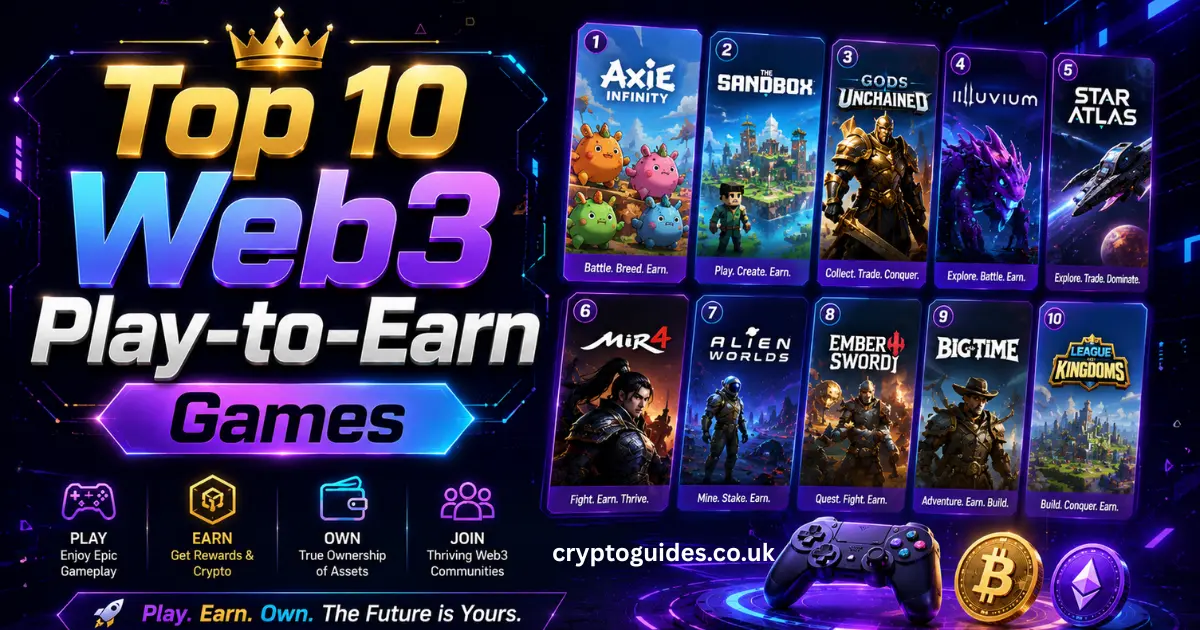
Choosing your games wisely is everything in P2E gaming. The wrong game wastes months. The right game, entered at the right time with the right strategy, can generate life-changing income. Here are the top 10 play-to-earn games dominating 2026 each analyzed for earning potential, entry requirements, and long-term viability.
Get a Blazing-Fast RPC Endpoint for Trading, Sniping, Automation, and More
Before diving into individual games, serious web3 gaming crypto earners need to understand one technical edge most players ignore: RPC endpoints. A Remote Procedure Call endpoint is essentially your direct line to a blockchain network. Most players use public RPC endpoints provided by default in their wallets. These are slow, congested, and unreliable during peak times.
Professional earners use dedicated RPC providers like QuickNode or Alchemy. A dedicated endpoint processes your transactions faster than public alternatives sometimes 10–50x faster. In games where timing matters sniping rare NFTs the moment they list, claiming time-sensitive token rewards, or executing trades before prices shift this speed advantage translates directly into dollars. QuickNode’s gaming-optimized plans start at $49/month and consistently pay for themselves within days for active blockchain gaming participants.
Hamster Kombat
Hamster Kombat launched on the TON blockchain in 2024 and exploded into a global phenomenon with over 200 million players by early 2025. The game is deceptively simple you tap a cartoon hamster to earn coins, complete missions, and upgrade your virtual crypto exchange. But beneath the simple interface lies a sophisticated token economy that rewarded early players massively during the HMSTR token launch.
In 2026, Hamster Kombat remains one of the most accessible entry points into web3 gaming crypto for complete beginners. It requires no upfront investment, runs on any smartphone, and generates consistent small earnings through daily missions and passive coin accumulation. It’s not a $10K/month game on its own — but as part of a diversified earning stack, it contributes reliable daily income with zero financial risk.
Pixels
Pixels is the play-to-earn game that changed how people think about metaverse gaming in 2025 and 2026. Built on Ronin, it combines the casual appeal of farming simulators with the deep economic layers of a fully decentralized marketplace. Players own land NFTs, grow crops, craft resources, and trade goods all generating PIXEL tokens with real market value.
What makes Pixels exceptional is its economic depth. Land ownership generates passive income even when you’re not playing. Crafting rare items creates scarcity that drives virtual asset trading on the open market. Guild systems amplify earnings through cooperative play. A dedicated Pixels player managing three to five land NFTs and participating in daily quests can realistically earn $1,000–$3,000 per month in 2026 — making it one of the most compelling web3 game investment opportunities available.
Alien Worlds
Alien Worlds pioneered the “mine-to-earn” model that dozens of games have since copied. Players mine TLM tokens on six alien planets using NFT tools, compete in planetary governance through DAO voting, and trade resources on the open market. The game runs across multiple blockchains WAX and BNB Chain and consistently ranks among the top three blockchain gaming platforms by daily active users worldwide.
The TLM token listed on Binance in 2021 and has maintained relevance throughout multiple market cycles a rare feat in crypto gaming tokens. For USA players looking for a low-risk entry into earn crypto in games, Alien Worlds remains one of the most reliable options. You can start earning within minutes of setup, with zero entry cost and minimal learning curve.
Axie Infinity
Axie Infinity is the game that proved P2E gaming could generate life-changing income at scale. During its 2021 peak, thousands of Filipino families were using Axie scholarship earnings as their primary income source. The game later faced a brutal market correction and a $625 million bridge hack but it rebuilt, restructured, and emerged in 2025 as a more sustainable platform than ever.
In 2026, Axie Infinity’s revamped “Homeland” mode and updated scholarship system have restored its earning credibility. New players can access scholarships arrangements where existing NFT owners lend their Axies to players in exchange for a revenue split making entry possible with zero capital. The AXS governance token has recovered significantly from its 2022 lows, and staking AXS currently yields approximately 8–12% annually. For serious web3 gaming crypto investors, Axie remains a blue-chip holding.
Splinterlands
Splinterlands is the most battle-tested play-to-earn game in existence. Launched in 2018, it has survived three full crypto market cycles including the devastating 2022 bear market that wiped out dozens of competing games. Its dual token model (SPS for governance, DEC for in-game currency) has proven remarkably resilient, and its card-based combat gameplay attracts both casual players and hardcore strategists.
The entry path into Splinterlands is one of the most beginner-friendly in web3 gaming crypto. A $10 spellbook purchase unlocks full earning capability. Competitive players who build strategic card collections can earn $500–$1,500 monthly through ranked battles, seasonal rewards, and card rental income. Renting cards to other players even while you sleep generates passive DEC and SPS earnings that compound over time.
Upland
Upland is the most uniquely American blockchain gaming experience available. It maps virtual real estate directly onto real USA cities New York, San Francisco, Chicago, Nashville, and dozens more. Players buy, sell, and develop virtual properties that mirror real street addresses. Rare properties on famous streets command premium prices in virtual asset trading markets.
What makes Upland compelling for USA players specifically is the cultural familiarity. You’re not buying alien planets or fantasy castles you’re buying a virtual version of the corner lot in your hometown. The game’s economy is surprisingly deep, with property development, business ownership, and sports collectible integration all contributing to UPX token circulation. Active Upland players with diversified property portfolios report consistent monthly earnings of $200–$800 — solid passive income with a genuinely fun gaming experience attached.
Guild of Guardians
Guild of Guardians represents the most ambitious attempt to bring AAA mobile gaming quality to blockchain gaming. Built on Immutable X by the team at Stepn developer Direwolf Digital, it’s a mobile RPG where players battle through dungeons, collect hero NFTs, and craft powerful gear all with real monetary value. The GOG token powers the entire economy and trades on major exchanges including Binance.
The guild mechanic in Guild of Guardians isn’t just a social feature it’s a core earning strategy. Players who join high-performing guilds share in collective dungeon rewards, receive exclusive NFT drops, and benefit from shared resources that individual players can’t access. For web3 gaming crypto players interested in cooperative earning models, Guild of Guardians offers one of the most sophisticated guild economies in the industry.
Filter Through Thousands of Tools Catered to Your Stack
The web3 gaming crypto ecosystem has spawned an entire industry of supporting tools. DappRadar tracks game performance, user numbers, and token volumes across every major blockchain gaming platform. CoinGecko’s gaming section monitors crypto gaming tokens prices, market caps, and trading volumes in real time. Footprint Analytics provides detailed on-chain data about player behavior and economic flows within specific games.
For developers and advanced players, QuickNode’s RPC infrastructure connects directly to blockchain networks for fast, reliable transaction processing. Moralis provides pre-built APIs that dramatically reduce web3 game development time. Thirdweb offers plug-and-play smart contract tools that even non-developers can use to mint and manage in-game NFTs. These tools aren’t optional extras — they’re competitive advantages that separate informed players from the crowd.
Introduction to Gaming
Gaming has always been about escape, competition, and community. Since Pong lit up the first arcade screens in 1972, games have captured human attention like almost nothing else. But for fifty years, gaming was purely a cost center for players. You bought the console, bought the games, spent hundreds of hours — and walked away with nothing tangible to show for it except memories and maybe a high score.
Web3 gaming crypto changes this equation permanently. For the first time in gaming history, players can build genuine financial value through gameplay. The hours you invest don’t just generate entertainment — they generate tokenized gaming assets that you own outright. This is more than a business model innovation. It’s a fundamental redefinition of what games are and what they can do for the people who play them.
Decentralized Gaming: The Shift to Web3
The shift from traditional gaming to blockchain gaming didn’t happen overnight. It emerged from a confluence of three technologies maturing simultaneously: blockchain infrastructure capable of handling gaming transaction volumes, NFT standards enabling verifiable digital ownership, and DeFi protocols creating sophisticated in-game financial systems.
Decentralized gaming means no single authority controls the game economy. Smart contracts self-executing code on the blockchain govern every transaction automatically. When you earn tokens in Alien Worlds, a smart contract sends them to your wallet. When you sell an NFT on an NFT marketplace for games, a smart contract processes the payment and transfers ownership all without a company employee touching the transaction. This removes counterparty risk, eliminates platform fees that traditionally benefit corporations over players, and creates transparent economic systems that anyone can audit at any time.
What Is Play-to-Earn (P2E) in Web3?
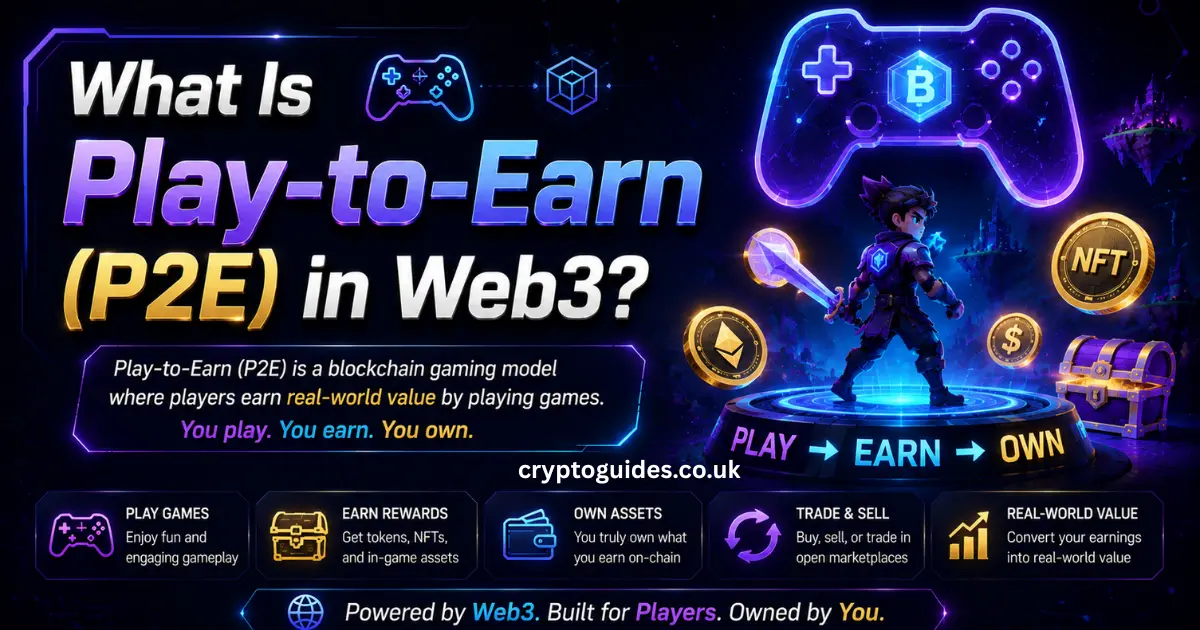
Play-to-earn games operate on a deceptively simple principle: your in-game actions generate digital assets with real monetary value. Kill a monster and earn tokens. Win a battle and receive NFT rewards. Complete a quest and unlock rare items you can sell on an NFT marketplace for games. Every action has economic consequence — and those consequences accumulate into real income over time.
The mechanics vary by game. Some P2E gaming models reward daily login streaks with token bonuses. Others tie earnings directly to competitive performance — better players earn more. Guild-based games reward collective achievement, distributing earnings across all contributing members. Scholarship models let non-owning players earn by borrowing NFT assets from investors and splitting the proceeds. Each model has different risk and reward profiles, and understanding them is essential for building a sustainable web3 gaming crypto income strategy.
A realistic beginner journey looks something like this: Week one, you set up a MetaMask wallet and fund it with $50 of ETH for gas fees. Week two, you start with a free-to-play game like Alien Worlds to learn the basics of earn crypto in games without financial risk. Month two, you reinvest your first earnings into a starter pack for Splinterlands. Month four, you’re running three games simultaneously, staking tokens for passive income, and approaching $500/month in combined earnings. Month eight — if you’ve followed a disciplined strategy — you’re targeting $2,000/month. The $10K level takes 12–18 months of compound reinvestment for most dedicated players.
Start Building Now
Starting your web3 gaming crypto journey doesn’t require technical expertise or a large bankroll. It requires three things: a crypto wallet, a small amount of starting capital, and the discipline to learn before you spend.
Step one: Download MetaMask (desktop browser extension) or Trust Wallet (mobile). These are the most widely compatible wallets for blockchain gaming platforms. Step two: Purchase $50–$100 of cryptocurrency through a reputable exchange. Coinbase is the easiest for USA beginners — it’s regulated, insured, and beginner-friendly. Step three: Choose one free-to-play game and spend two weeks understanding its economy before investing anything. Alien Worlds and Hamster Kombat are the best starting points because they cost nothing and teach you the fundamental mechanics of earn crypto in games. Step four: Reinvest your first earnings rather than cashing out immediately. Compound growth is the engine behind every $10K/month success story in web3 gaming crypto.
Common P2E Game Models
Understanding the different economic models within play-to-earn games is like understanding different business models before starting a company. Each model has unique advantages, risks, and earning ceilings. The most successful P2E gaming participants diversify across multiple models simultaneously.
1. Token Rewards for Gameplay
The most straightforward P2E gaming model rewards players with tokens for completing in-game actions. Battle wins, daily quests, resource gathering, and tournament placements all generate crypto rewards for gamers directly to their wallets. Alien Worlds exemplifies this model — every mining action generates TLM tokens proportional to the NFT tools used and the luck factor of each mine.
The key risk in token reward models is inflation. If a game generates too many tokens without enough sinks (ways to spend or burn tokens), the token price drops and earnings erode in real dollar terms. Games that manage this balance well — through careful tokenomics design and regular economic adjustments — deliver sustainable earnings. Games that get it wrong become ghost towns within months.
2. NFT-Based Economy
NFT games built around NFT economies generate earnings through asset appreciation and marketplace trading rather than (or in addition to) token farming. Players earn in-game NFTs through gameplay — characters, weapons, land, pets, and cosmetics — and sell them on open marketplaces. Rare NFTs from popular games regularly sell for thousands of dollars.
The most profitable NFT economy players aren’t just passive collectors. They’re active traders who understand rarity mechanics, buy undervalued assets, and flip them for profit. This requires deep knowledge of each game’s crypto game economy, market timing skills, and patience — but the ceiling on earnings is theoretically unlimited. The most valuable in-game NFTs in games like Axie Infinity and Decentraland have sold for over $1 million.
3. Guild Ecosystems
Gaming guilds in web3 function like decentralized investment cooperatives. Guild treasuries hold NFT assets that individual players use to earn. Earnings flow back to the treasury, which distributes them among guild members based on contribution. Top guilds like Yield Guild Games (YGG), Merit Circle, and GuildFi have treasury values exceeding $50 million managing NFT portfolios across dozens of games simultaneously.
For individual players, joining a reputable guild dramatically amplifies earning potential. You gain access to NFT assets you couldn’t afford individually. You benefit from collective knowledge and strategy sharing. You participate in gaming DAO governance that influences how the guild deploys its capital. In 2026, the top USA-based guilds accept applications and actively recruit skilled players representing one of the fastest paths to serious web3 gaming crypto income for talented gamers without large starting capital.
4. Dual Token Models
The dual token model emerged as a direct response to the inflation problems that plagued early play-to-earn games. Instead of one token serving all purposes, dual token games use two separate tokens: a governance token (scarce, valuable, used for staking and voting) and a utility token (more abundant, used for in-game transactions and rewards).
Splinterlands perfected this with SPS (governance) and DEC (utility). Axie Infinity uses AXS (governance) and SLP (utility). The separation creates economic stability — player earnings in utility tokens don’t directly dilute the value of governance tokens, which remain scarce and valuable as long-term holdings. For web3 game investment purposes, governance tokens from dual token games represent significantly lower inflation risk than single-token alternatives.
5. Hybrid GameFi Platforms
Hybrid GameFi platforms combine traditional gameplay with decentralized finance mechanisms creating earning opportunities that go far beyond simple token rewards. Players can stake their earned tokens for compound interest. They can provide liquidity to in-game DEX exchanges for trading fee income. They can lock NFTs as collateral for in-game loans. And they can participate in yield farming strategies that generate passive income 24 hours a day regardless of whether they’re actively playing.
DeFi Kingdoms is the most sophisticated example of a hybrid GameFi platform currently operating. Its dual-blockchain presence (Harmony and Avalanche) and deep DeFi integration give active participants earning streams from six or seven different mechanisms simultaneously. Advanced players treat it less like a game and more like a multi-yield investment portfolio with a fantasy RPG interface attached.
Popular Play-to-Earn Games
Beyond the top 10 already covered, dozens of solid play-to-earn games merit attention from serious web3 gaming crypto participants. Gods Unchained offers competitive card game depth with zero entry cost and consistent GODS token rewards for ranked play. Star Atlas — the most visually ambitious blockchain gaming project ever attempted — is building a full-scale space economy on Solana with dedicated development funding exceeding $200 million. Illuvium combines AAA RPG gameplay with a robust NFT economy on Immutable X, targeting mainstream gamers who’ve never heard of crypto gaming tokens but quickly learn to love them.
Leading P2E Gaming Platforms
| Platform | Games Hosted | Blockchain | USA Access | Key Feature |
|---|---|---|---|---|
| Ronin Network | 15+ | Custom EVM | Yes | Near-zero fees |
| Immutable X | 30+ | Ethereum L2 | Yes | Zero gas fees |
| WAX | 150+ | Custom EOSIO | Yes | Gaming-first design |
| Solana | 50+ | Solana | Yes | Ultra-fast transactions |
| BNB Chain | 100+ | EVM Compatible | Yes | Binance integration |
Evolving Gaming Experiences in Web3
The next-gen gaming blockchain experiences emerging in late 2025 and 2026 are genuinely exciting. Virtual reality integration is moving from experimental to functional, with games like Somnium Space and Decentraland adding VR compatibility that transforms metaverse gaming from a concept into a visceral experience. AI-generated game content is creating dynamic worlds that adapt to player behavior — making every session unique and preventing the repetitive grinding that killed engagement in early P2E gaming titles.
Cross-chain gaming where assets from one blockchain work seamlessly in games on another — is perhaps the most significant technical development of 2026. A sword earned in an Immutable X game that you can also use in a Solana game represents a level of true ownership that even traditional gamers immediately understand and value. Several blockchain gaming platforms are building cross-chain bridges specifically for gaming assets, and the implications for web3 game investment are substantial.
Infrastructure Challenges in P2E Gaming
Honesty matters in web3 gaming crypto coverage. The space has real problems that deserve straightforward discussion. Gas fees while dramatically reduced on Layer 2 solutions — still create friction for high-frequency players. Network congestion during popular game events can slow transactions to a crawl, costing players time and sometimes earnings. Smart contract vulnerabilities have led to devastating hacks — the Axie Infinity bridge hack alone cost $625 million in 2022, a painful reminder that even the most popular blockchain gaming platforms aren’t immune to technical failure.
Scalability remains the central challenge. Most blockchains struggle to handle millions of simultaneous gaming transactions without either slowing down or charging prohibitive fees. The solutions being deployed — Layer 2 rollups, dedicated gaming sidechains, state channels are technically promising but introduce new complexity that bewilders average players. The next-gen gaming blockchain infrastructure of 2026 is vastly better than 2021’s, but it still can’t match the seamless experience of playing a traditional AAA game on PlayStation.
Token sustainability is another genuine concern. Many P2E gaming economies rely on constant new player influx to fund existing player earnings — a dynamic that critics correctly identify as structurally fragile. Games that solve this through genuine gameplay value, deep DeFi integration, and controlled token emission are building toward long-term viability. Those that don’t are building elaborate Ponzi structures that eventually collapse. Distinguishing between the two requires diligent research into each game’s tokenomics documentation.
Why QuickNode for Web3 Game Developers?
Every serious web3 gaming crypto platform needs reliable blockchain infrastructure, and QuickNode has emerged as the leading RPC provider for web3 game development teams. Their global network of nodes provides sub-50ms response times for transaction processing — critical for games where split-second timing affects player outcomes and earnings.
QuickNode supports every major gaming blockchain: Ethereum, Polygon, Solana, Avalanche, BNB Chain, and Ronin. Developers building on any of these networks get access to dedicated endpoints, WebSocket connections for real-time data, and analytics dashboards that monitor performance. For blockchain gaming platforms processing millions of daily transactions, QuickNode’s enterprise tier provides the reliability guarantees that consumer-facing games demand.
For players (not just developers), QuickNode’s importance is indirect but real. The games you play are only as reliable as their infrastructure. When you choose games built on QuickNode’s infrastructure, you’re choosing faster transactions, fewer failures, and a better overall earning experience. It’s one of the invisible factors that separates top-tier blockchain gaming platforms from amateur operations.
Web3 & Blockchain in Gaming
The relationship between web3 technology and gaming isn’t just technical it’s philosophical. Blockchain gaming represents a new social contract between game developers and players. Instead of developers owning everything and players owning nothing, blockchain games create genuine shared economies where both parties benefit from growth. Developers earn through initial NFT sales, transaction fees, and token appreciation. Players earn through gameplay, trading, and community contribution. Aligned incentives create sustainable ecosystems — at least when the underlying game is genuinely engaging.
Web3 & Blockchain in Gaming (Ebook)
The definitive resource for understanding web3 gaming crypto comprehensively is the annual Web3 Gaming Report published jointly by DappRadar and Blockchain Game Alliance. The 2026 edition covers market sizing, player behavior data, token performance analysis, regulatory landscape updates, and deep dives into each major blockchain gaming platform. It’s free to download at DappRadar.com and represents the most data-rich overview of the entire industry available to the public. Anyone serious about web3 game investment should read it cover to cover before committing significant capital.
Web3 and Blockchain Are Changing the Game
Traditional gaming companies generated $220 billion in revenue in 2025. Players contributed every dollar of that — and received entertainment in return, but no financial stake. Blockchain gaming is redirecting a portion of that value flow back toward players. DappRadar estimates that play-to-earn games distributed over $3.2 billion in token and NFT earnings to players globally in 2025. USA players received approximately $680 million of that total.
The key innovation blockchain brings to gaming isn’t just financial. It’s about verifiable scarcity. When a game developer says a particular sword is “rare,” you have no way to verify that in a traditional game. The developer could create a million copies without your knowledge. In blockchain gaming, every asset’s total supply is publicly verifiable on the blockchain. True scarcity creates genuine value — and genuine value creates genuine earnings for the players who hold those assets.
GameFi, P2E & Gaming Economies
GameFi the merger of gaming and decentralized finance represents the most sophisticated layer of the web3 gaming crypto ecosystem. It’s not enough to simply earn tokens anymore. The players generating serious monthly income are deploying those earnings across multiple DeFi strategies simultaneously: staking governance tokens, providing liquidity, participating in yield farming, and reinvesting compound returns back into gaming NFTs.
Web3 gaming binance integration has been transformative for USA players. Binance lists more crypto gaming tokens than any other exchange and provides staking products for AXS, SPS, TLM, and dozens of other gaming tokens. Their Launchpad platform has hosted several major crypto game launch events, giving Binance users early access to tokens before they list on open markets — a significant financial advantage for holders who participate. Learning to navigate Binance’s gaming-specific features is a genuine competitive advantage in building a $10K/month web3 gaming crypto strategy.
Guild Ecosystems
Yield Guild Games (YGG) is the most influential gaming guild in the world, and their impact on the web3 gaming crypto economy is impossible to overstate. Founded in the Philippines in 2020, YGG grew from a small scholarship operation managing a handful of Axie NFTs into a global gaming investment fund with a treasury valued at over $100 million at its peak. Their scholarship model — lending NFTs to players in emerging economies proved that P2E gaming could genuinely improve living standards at scale.
In 2026, YGG operates sub-DAOs in over 30 countries, including a growing USA chapter. Players who join YGG gain access to NFT scholarships, educational resources, and a global network of web3 gaming crypto participants sharing strategies and opportunities. Merit Circle, another major guild with strong USA participation, focuses specifically on identifying and funding the most promising new play-to-earn games before they achieve mainstream awareness — giving guild members early-mover advantages on token and NFT positions.
Dual Token Models & Hybrid GameFi
The most economically sophisticated play-to-earn games in 2026 use dual token systems enhanced with hybrid GameFi mechanisms. DeFi Kingdoms perfected this with its JEWEL and CRYSTAL tokens using one for governance and ecosystem value while the other circulates freely through gameplay activities. The separation protects long-term investors from the inflation that inevitably accompanies active token emission through gameplay rewards.
Hybrid GameFi platforms take this further by integrating yield farming directly into the gameplay loop. Instead of just earning tokens through battle victories, players can immediately deploy those earnings into liquidity pools within the same game interface. DeFi Kingdoms lets players stake tokens, provide DEX liquidity, and earn compound returns without ever leaving the game client. This seamless integration of finance and gameplay is the defining characteristic of the most advanced crypto game economy designs in 2026.
Decentralized Platforms & Community DAOs
A gaming DAO — Decentralized Autonomous Organization — gives players genuine governance power over the games they play and invest in. In traditional gaming, developers make every decision about game updates, economic changes, and content additions. Players have no voice. In blockchain gaming, DAO governance lets token holders vote on proposals that directly affect the game economy — including emission rates for crypto gaming tokens, new feature prioritization, treasury spending, and partnership decisions.
Axie Infinity’s AXS holders have voted on major economic changes including token burn mechanisms and scholar program restructuring. Splinterlands’ SPS holders regularly vote on card set releases and tournament prize structures. These aren’t ceremonial votes — they’re binding decisions executed automatically by smart contracts. When you hold governance tokens in a quality blockchain gaming platform, you’re not just an investor. You’re a stakeholder with real decision-making power.
NFTs & In-Game Asset Ownership
The concept of truly owning a digital item was science fiction before blockchain technology made it technically achievable. In-game NFTs are digital assets that exist on a public blockchain with immutable proof of ownership linked to your wallet address. No game developer, no platform company, and no government can transfer, delete, or alter that ownership record without your cryptographic signature.
The NFT marketplace for games ecosystem has matured significantly. OpenSea remains the largest general NFT marketplace, but gaming-specific platforms like Magic Eden (strong on Solana gaming), IMX Marketplace (Immutable X games), and the Ronin Marketplace (Axie Infinity, Pixels) offer better discovery tools and lower fees for gaming NFT traders. Learning to navigate these marketplaces — identifying undervalued assets, timing purchases and sales, and understanding floor prices versus true value — is a skill that pays direct dividends in web3 gaming crypto income.
Gaming token airdrops represent a special category of NFT and token distribution. Games regularly reward active players and early community members with free token allocations — sometimes worth thousands of dollars. Pixels distributed PIXEL tokens to active players before the token’s public launch, creating overnight windfalls for participants who’d been playing for months. Staying active in promising games before their token launch is one of the most reliable strategies for capturing gaming token airdrops in the current crypto gaming news 2026 landscape.
Top Web3 Gaming Companies / Studios
The companies building the future of web3 gaming crypto represent some of the most well-funded startups in technology. Understanding who the major players are helps you evaluate which games are built on solid foundations versus which ones are underfunded experiments likely to disappear.
| Company | Key Games | Blockchain Focus | Funding Raised |
|---|---|---|---|
| Sky Mavis | Axie Infinity | Ronin | $150M+ |
| Gala Games | Multiple titles | Ethereum / GalaChain | $100M+ |
| Animoca Brands | The Sandbox, multiple | Multiple | $500M+ |
| Immutable | Gods Unchained, Guild of Guardians | Immutable X | $200M+ |
| Dapper Labs | NBA Top Shot, NFL All Day | Flow | $600M+ |
| Yield Guild Games | Multi-game guild | Multiple | $75M+ |
Animoca Brands deserves special attention. The Hong Kong-based company has invested in over 400 web3 gaming crypto projects and holds equity stakes in most of the industry’s most promising studios. When Animoca invests in a game, it signals institutional confidence — and often brings its entire portfolio network as a built-in user base. Tracking Animoca’s investments is one of the best early-detection strategies for identifying promising web3 game investment opportunities before they achieve mainstream attention.
Best Web3 Game Development Platforms
For developers entering the web3 gaming crypto space, the infrastructure landscape has improved dramatically. Building a web3 game in 2026 requires far less blockchain expertise than it did even two years ago, thanks to comprehensive development platforms that abstract away most of the complexity.
Immutable’s developer platform offers game studios pre-built NFT minting tools, marketplace integration, and gasless transaction infrastructure allowing developers to focus on gameplay rather than blockchain mechanics. Thirdweb provides smart contract templates for every common gaming use case: NFT drops, token creation, marketplace contracts, and staking systems. Moralis offers backend infrastructure that handles wallet authentication, real-time blockchain data, and cross-chain compatibility. Unity and Unreal Engine the two dominant game engines now both have official web3 SDKs that integrate blockchain functionality directly into the development workflow most studios already use.
Web3 Gaming Crypto Coins / Tokens
The crypto gaming tokens market is large, volatile, and filled with opportunity — if you know how to evaluate assets properly. Not every gaming token deserves your investment. Many are poorly designed, inadequately backed, or tied to games that won’t achieve meaningful user adoption. But the tokens backing genuinely strong games with growing user bases have historically delivered extraordinary returns.
Evaluating a gaming token requires examining five factors: the game’s daily active user trend (growing or declining?), the token’s utility within the game economy (is it genuinely necessary or cosmetic?), the emission rate versus burn rate (is supply expanding faster than demand?), the team’s track record (have they delivered promised updates?), and the token’s exchange listings (Binance listing dramatically increases liquidity and legitimacy).
On the question of web3 gaming crypto gambling — a related but distinct sector — USA players should exercise caution. Several platforms blur the line between skill-based P2E gaming and gambling mechanics. Regulatory treatment varies by state, and the legal landscape continues evolving in 2026. Always verify the legal status of any platform that involves wagering or chance-based mechanics in your specific state before participating.
Web3 Gaming Blockchain Technology
The next-gen gaming blockchain infrastructure of 2026 bears little resemblance to the slow, expensive Ethereum mainnet that powered early blockchain gaming experiments. Layer 2 scaling solutions have solved the gas fee problem for most use cases. Dedicated gaming sidechains offer near-instant transaction finality. Cross-chain bridges enable asset portability across networks. And zero-knowledge proof technology is enabling privacy features that protect competitive gaming integrity — preventing opponents from seeing your inventory or strategy before matches.
The blockchain choice for a specific game directly affects the player experience. Ronin — built specifically for gaming — processes transactions in under one second with fees so low they’re essentially free. Immutable X uses zero-knowledge rollup technology to batch thousands of transactions together, reducing Ethereum gas costs to zero for NFT trades. Solana’s parallel transaction processing handles 65,000 transactions per second — more than enough for even the most active gaming platforms. Each technical choice reflects the game developer’s priorities and directly affects the player’s earning efficiency.
Best Web3 Gaming Crypto Platforms (Binance, etc.)
Converting your web3 gaming crypto earnings into real dollars or reinvesting them strategically requires access to quality exchange platforms. For USA players, the options have consolidated significantly following regulatory clarity in 2025.
Binance.US supports the most comprehensive selection of crypto gaming tokens and offers staking products for several major gaming tokens. Coinbase the most regulated and trusted exchange for USA players — has added gaming token support for AXS, SAND, MANA, and several others. Kraken offers strong security and good gaming token selection. For DEX trading of smaller gaming tokens not listed on major exchanges, Uniswap (Ethereum/Polygon tokens) and Jupiter (Solana tokens) provide access to the full range of crypto gaming tokens available in the market.
Tax efficiency is a critical consideration that most new web3 gaming crypto players overlook. In the USA, the IRS treats gaming token earnings as taxable income at the time of receipt. Token appreciation is subject to capital gains tax. Careful record-keeping using tools like Koinly or CoinTracker — which integrate with major blockchain gaming platforms to automatically track your earning history — is essential for legal compliance and avoiding painful surprises at tax time.
Protokol Gaming Services
Web3 Developmen
Protokol provides enterprise-grade web3 game development services for studios transitioning from traditional gaming to blockchain gaming. Their development practice covers everything from smart contract architecture and token design to NFT infrastructure and marketplace integration. For studios that understand gaming but need blockchain expertise, Protokol’s development team bridges the gap between creative vision and technical execution.
Web3 Consulting
Strategic consulting for web3 gaming crypto ventures is where Protokol distinguishes itself most clearly. Their consulting practice helps traditional gaming studios evaluate the economic viability of token integration, design sustainable crypto game economy models that avoid the inflation pitfalls that destroyed early P2E games, and navigate the complex regulatory landscape affecting blockchain gaming in the USA and globally. For studios considering a crypto game launch, proper economic design consulting upfront dramatically increases the probability of long-term success.
Web3 Gaming Crypto News & Market Trends
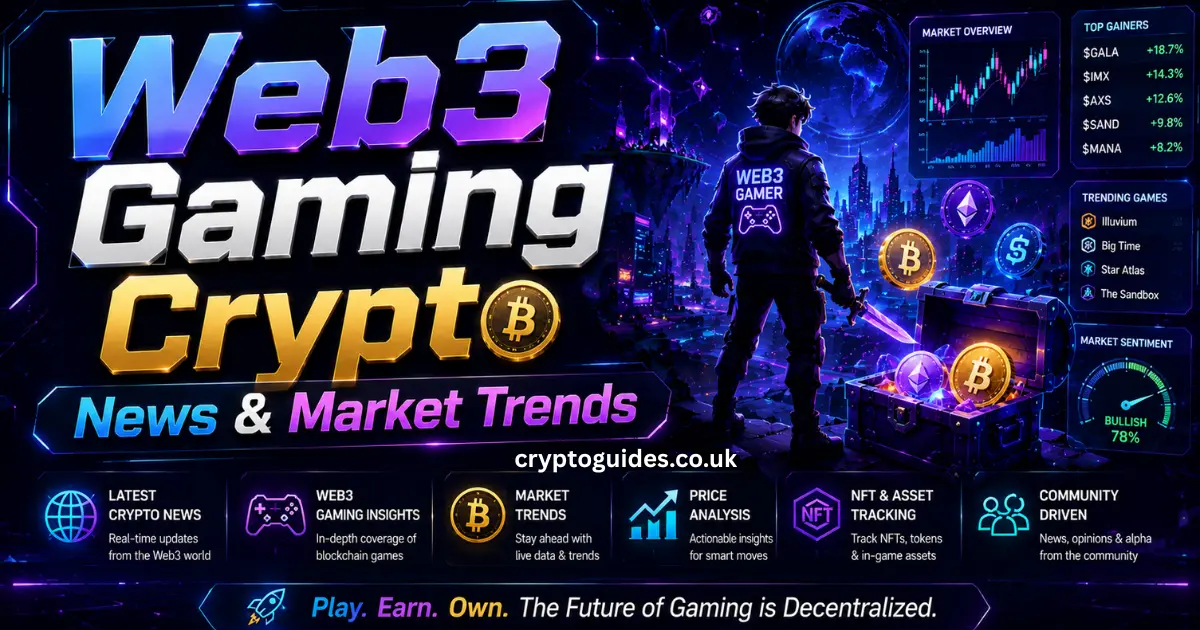
The crypto gaming news 2026 cycle moves fast. Token prices shift within hours of major announcements. New game launches create immediate investment opportunities — and immediate scam risks. Regulatory updates can open or close entire markets overnight. Staying genuinely informed requires following multiple quality sources simultaneously.
The most reliable sources for web3 gaming crypto news include DappRadar’s Gaming Insights (weekly reports with actual data), CoinGecko’s Gaming section (token price data with gaming context), Decrypt (investigative journalism on blockchain gaming business stories), The Block (regulatory and institutional coverage), and official game Twitter/X accounts and Discord servers (fastest source for game-specific announcements). Aggregating across these sources gives you a comprehensive picture of market movements, emerging opportunities, and risk signals that individual sources miss.
Latest Web3 Games & Play-to-Earn Updates
The most important new play-to-earn games launching or achieving major milestones in 2026 include several titles worth tracking closely. Shrapnel’s full competitive multiplayer launch on Avalanche has attracted hundreds of thousands of first-person shooter players who’d never previously engaged with web3 gaming crypto potentially unlocking a massive new user segment. BigTime’s Season Two expansion introduced new token emission mechanics that significantly improved its long-term economic sustainability. Parallel’s card game ecosystem added staking functionality that converts competitive tournament winnings into passive income streams.
The gaming token airdrops calendar for the remainder of 2026 includes several highly anticipated distributions. Multiple games currently in beta testing have confirmed token generation events for Q3 and Q4 2026. Players currently active in these games — contributing gameplay data and community feedback during beta periods — will receive preferential airdrop allocations when tokens launch. This represents one of the highest expected-value strategies available in web3 gaming crypto today.
NFT Rewards, Tokenomics, and Guild Ecosystems
Tokenomics — the economic design governing how crypto gaming tokens are created, distributed, and destroyed — is the single most important factor in predicting a game’s long-term earning viability. Games with well-designed tokenomics maintain token value over time, creating sustainable earnings for patient participants. Games with poor tokenomics experience token hyperinflation that erodes player earnings to near-zero within months of launch.
The key tokenomics metrics to evaluate before committing to any P2E gaming platform include: total token supply and current circulating supply, daily emission rate through gameplay rewards, token sink mechanisms (ways tokens are spent or burned to reduce supply), vesting schedules for team and investor allocations, and the ratio of new player capital inflow to existing player earning outflow. Platforms that earn more from new player entry fees than from genuine gameplay engagement are structurally dependent on perpetual growth a fragile model that fails when user acquisition slows.
In-game NFTs compound in value when the game’s economy is healthy and growing. A rare sword worth $100 today in a thriving game with 500,000 active players might be worth $1,000 in eighteen months if the player base triples. This appreciation dynamic absent in traditional gaming transforms engaged web3 gaming crypto players into genuine investors who benefit from the platform’s overall success.
Insights: Web3 & Blockchain in Gaming
The consensus among serious analysts covering blockchain gaming in 2026 is cautiously optimistic but increasingly data-driven. The speculative frenzy of 2021-2022 where tokens doubled weekly and everyone assumed perpetual growth has given way to a more mature market where fundamentals matter. Games with genuine gameplay quality, responsible tokenomics, and transparent development teams are performing well. Everything else is struggling.
The $10K/month opportunity is real but it’s not passive. It requires treating web3 gaming crypto as a part-time business: studying tokenomics before investing, diversifying across multiple games and income streams, staying informed about crypto gaming news 2026 developments, and maintaining disciplined reinvestment strategies. The players achieving this income level consistently report working 20-30 hours per week on their P2E gaming activities — comparable to a serious part-time job, with income potential that far exceeds minimum wage returns.
“The players who win in web3 gaming crypto long-term are the ones who treat it like investors, not gamblers. They research, diversify, and reinvest. The ones who chase hype lose money. The ones who follow fundamentals build wealth.” — Industry analyst, Blockchain Gaming Alliance 2026 Report
Build Blockchain Magic
The most exciting aspect of the web3 gaming crypto revolution isn’t the earning potential it’s the creative potential. For the first time, independent developers can build games with genuine economies where players actually own their digital lives. A two-person team with the right blockchain development tools can create a game that generates millions in token and NFT trading volume. The traditional barriers publisher gatekeeping, massive development budgets, distribution platform fees don’t apply in blockchain gaming.
Several success stories prove this point compellingly. Splinterlands was built by a two-person team. It now has hundreds of thousands of active players and has processed over $1 billion in virtual asset trading volume. Gods Unchained launched with a small team and limited budget. Its NFT card market has generated tens of millions in trading volume for players who participated early. The tools available to independent web3 game development teams in 2026 — Thirdweb, Moralis, Immutable’s developer platform, QuickNode’s RPC infrastructure — are genuinely democratizing game creation in ways that were impossible just three years ago.
Supercharge Your Inbox
Staying ahead in web3 gaming crypto means getting information before the general public. The fastest way to achieve this is subscribing to quality newsletters that curate the most important crypto gaming news 2026 developments and deliver them directly to your inbox weekly. DappRadar’s weekly gaming report covers platform statistics, new game launches, and token performance.
The Defiant covers GameFi and blockchain game news with strong investigative depth. Decrypt’s gaming newsletter balances accessible writing with genuine technical depth — perfect for players who want to understand the technology behind their earnings. Thousands of USA P2E gaming participants report that newsletter-based information discovery consistently surfaced their most profitable web3 game investment opportunities before those games achieved mainstream awareness.
Conclusion: Your $10K/Month Roadmap Starts Today
The web3 gaming crypto opportunity of 2026 is real, it’s growing, and most players are still ignoring the systematic strategies that separate serious earners from casual participants. The $10K/month isn’t a lottery ticket it’s the result of treating block chain gamings as a disciplined investment practice combined with skilled gameplay across multiple platforms.
Three steps summarize the entire strategy. First, start with free-to-play games to learn the mechanics of earn crypto in games without financial risk. Second, reinvest your early earnings into higher-yield opportunities NFT games, guild memberships, and governance token staking. Third, diversify across multiple earning models token farming, virtual asset trading, guild participation, and passive staking to create income streams that don’t all depend on a single game’s success.
Web3 gaming crypto isn’t just a trend. It’s a permanent restructuring of the relationship between players and games. The technology works. The economies are real. The earnings are real. The only question is whether you’re going to participate intelligently or keep watching from the sidelines while others build wealth through the games you’re already playing.
Start with one wallet. Pick one game. Learn one economy deeply. Then scale.
FAQs
What Are the Best Web3 Games to Play?
The best Web3 games in 2026 are those with strong player bases and real earning systems like Axie Infinity, Splinterlands, and Pixels, where you can earn crypto through gameplay and NFT trading.
How Do Web3 Games Make Money?
Web3 games make money through NFT sales, transaction fees, and token economies, where players spend and trade within the game ecosystem using crypto.
Are Web3 Games Safe to Invest In?
They can be risky because token prices and game popularity change fast, so only invest what you can afford and choose games with strong communities and transparent developers.
How to Start Developing a Web3 Game?
Start by learning blockchain basics and smart contracts, then use platforms like Ethereum or Polygon to build simple game mechanics with NFT and token integration.
Disclaimer:
This article is for informational purposes only and does not constitute financial advice. Web3 gaming crypto investments carry significant risk. Always conduct your own research before investing.

I am an SEO and Guest Posting expert with 5+ years of professional experience in building high-authority backlinks, strategic outreach, and scalable SEO campaigns, especially in the Crypto and Blockchain industry. Passionate about helping brands achieve sustainable organic growth, I specialize in guest posting, white-hat authority link building, content outreach, and digital PR strategies that enhance online credibility and search engine performance. Over the years, I have collaborated with international clients and global brands, delivering result-driven SEO solutions and placements on high-authority, high-DR websites focused on increasing organic traffic, domain authority, and online visibility in competitive markets.