High-Yield Savings Account vs Stablecoin Staking: Which One Earns More Passive Income in 2026?
Introduction
Savings Account vs Stablecoin compares two ways to grow your money. A savings account keeps your cash in a bank. A stablecoin is a digital asset linked to a stable value.
Many people want higher returns on their money today. Some choose banks for safety and easy access. Others explore stablecoins for potentially higher rewards.
Both options have benefits and risks for investors. Savings accounts offer stability and predictable interest rates. Stablecoins may provide higher yields but involve more risk.
What Is a High-Yield Savings Account and How Does It Work?
A high-yield savings account is a bank account that pays significantly more interest than a traditional savings account. Many online banks offer competitive high-yield savings account rates because they operate with lower overhead costs than traditional branch-based banks. When you deposit money into one of these accounts, the bank uses those funds for lending and other financial activities. In return, it pays you interest.
One of the biggest advantages of a high-yield account is simplicity. You deposit money, leave it in the account, and watch it earn interest over time. Many of the best high-yield savings accounts allow customers to open accounts online within minutes. The earnings are usually displayed as a savings account APY, which stands for Annual Percentage Yield. This figure includes compound interest and gives you a clear picture of potential earnings throughout the year.
How High-Yield Savings Account Generate Interest
Banks earn profits by lending money at higher rates than they pay depositors. They share a portion of these profits with account holders through interest payments. The higher the APY, the faster your balance grows over time.
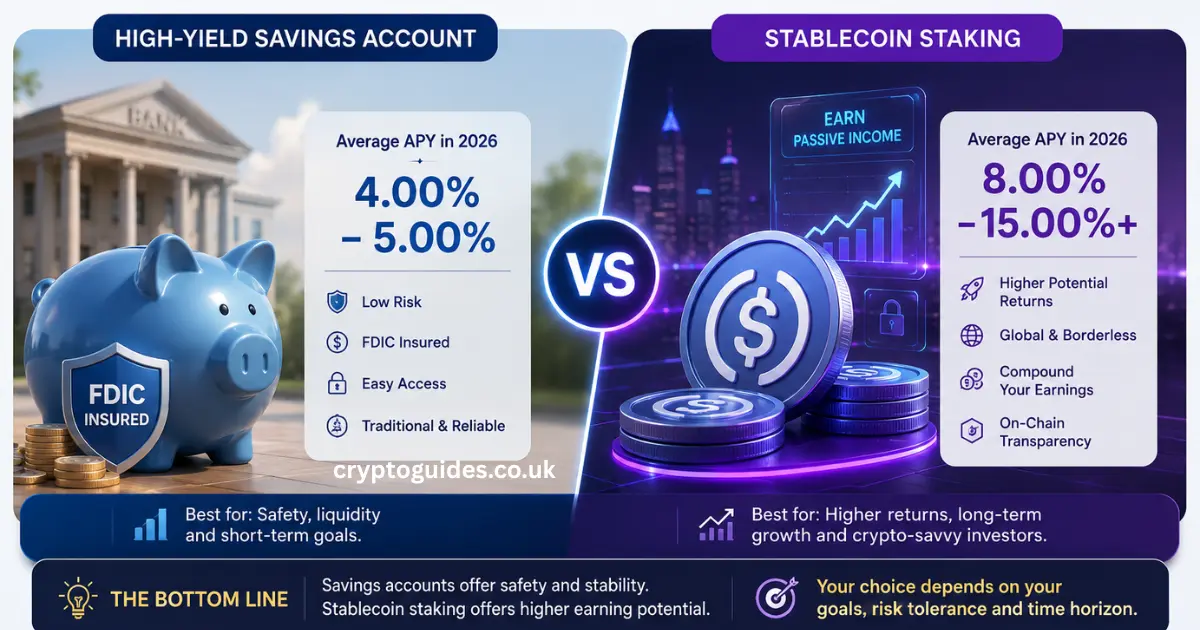
Average APY Rates in 2026
Many financial experts expect competitive online savings accounts to continue offering attractive rates compared to traditional banks. While rates change with economic conditions, online institutions often remain among the leaders in the market.
Benefits of High-Yield Savings Accounts
The primary benefit is safety. Most accounts qualify as an FDIC-insured savings account, protecting deposits up to applicable federal limits. This makes them popular among people seeking low-risk investments and reliable cash management tools.
Drawbacks to Consider
Although savings accounts offer stability, their returns may not always beat inflation. During periods of strong economic growth, investors often look for higher-return opportunities elsewhere.
What Is Stablecoin Staking? Everything Beginners Need to Know
Stablecoin staking allows investors to lock or deposit digital assets in exchange for rewards. Unlike volatile cryptocurrencies such as Bitcoin, stablecoins are designed to maintain a relatively stable value, often tied to the U.S. dollar. This stability makes them attractive to investors looking for crypto passive income opportunities without experiencing large price swings.
Many investors use staking to earn interest on stablecoins while keeping exposure to digital assets. When you stake stablecoins through exchanges, lending protocols, or crypto staking platforms, your funds help support network operations or lending activities. In return, you receive a stablecoin yield that may exceed traditional bank interest rates.
How Stablecoin Staking Works
Investors deposit stablecoins into a staking platform. The platform uses those assets within lending markets or blockchain systems and shares part of the generated revenue with users.
Popular Stablecoins Used for Staking
USDC, USDT, and DAI remain among the most popular choices for investors seeking stablecoin staking rewards due to their liquidity and widespread adoption.
How Staking Rewards Are Earned
Rewards come from lending activity, network participation, and decentralized financial services operating within the broader decentralized finance ecosystem.
Advantages of Stablecoin Staking
Potentially higher returns attract many investors. Some platforms offer yields that significantly exceed traditional bank interest rates.
Potential Downsides of Staking Stablecoins
Staking carries risks including platform failures, regulatory changes, and smart contract risk. Unlike traditional bank accounts, deposits typically lack government-backed insurance.
High-Yield Savings Account vs Stablecoin Staking: Key Differences
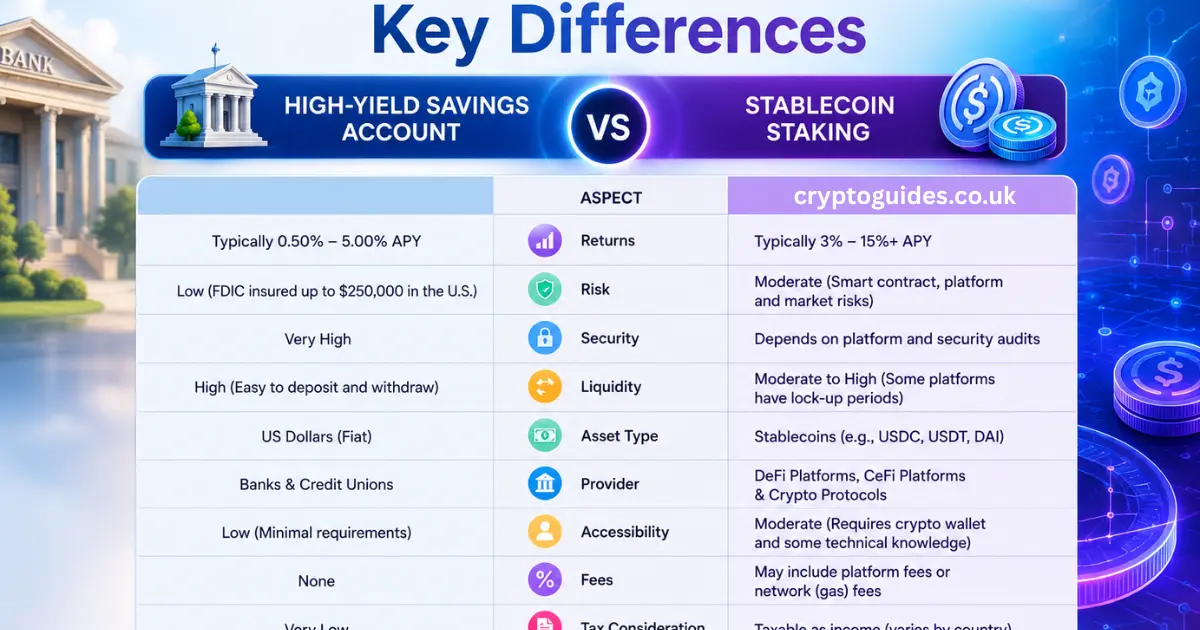
Choosing between these two options often comes down to balancing risk and reward. Savings accounts prioritize safety while stablecoin staking focuses on higher earning potential. The difference resembles choosing between a reliable family sedan and a faster sports car. Both can get you to your destination, but each comes with unique trade-offs.
Investors should evaluate returns, security, accessibility, taxation, and liquidity before deciding. Understanding these factors helps prevent costly mistakes and aligns investments with personal financial goals.
| Feature | High-Yield Savings Account | Stablecoin Staking |
|---|---|---|
| Risk Level | Low | Moderate to High |
| Potential Returns | Moderate | Higher |
| Insurance | FDIC Protection | Usually None |
| Liquidity | High | Depends on Platform |
| Complexity | Simple | Moderate |
| Regulation | Strong | Evolving |
Side-by-Side Breakdown of Key Features
The most important distinction lies in risk. Savings accounts protect principal balances while staking platforms depend on technology, platform stability, and market conditions.
Which Option Offers Higher Returns in 2026?
For investors focused solely on income generation, stablecoin staking often appears more attractive. Many staking opportunities offer yields above traditional savings products. These returns make staking one of the fastest-growing forms of yield-generating assets in the digital economy.
However, higher returns rarely come without additional risk. While savings accounts provide predictable earnings, staking rewards can fluctuate. The gap between stability and growth becomes the central consideration when comparing these two passive income methods.
Current Savings Account APY Trends
Competitive banks continue improving rates to attract deposits and remain competitive in the marketplace.
Average Stablecoin Staking Rewards
Many platforms offer returns that exceed traditional fixed-income products, making staking appealing for income-focused investors.
$10,000 Investment Growth Example
A larger yield can create a meaningful difference over several years, especially when rewards compound regularly.
Factors That Affect Earnings
Interest rates, market demand, platform policies, and economic conditions all influence returns.
Risk Comparison: Savings Account vs Stablecoin Staking
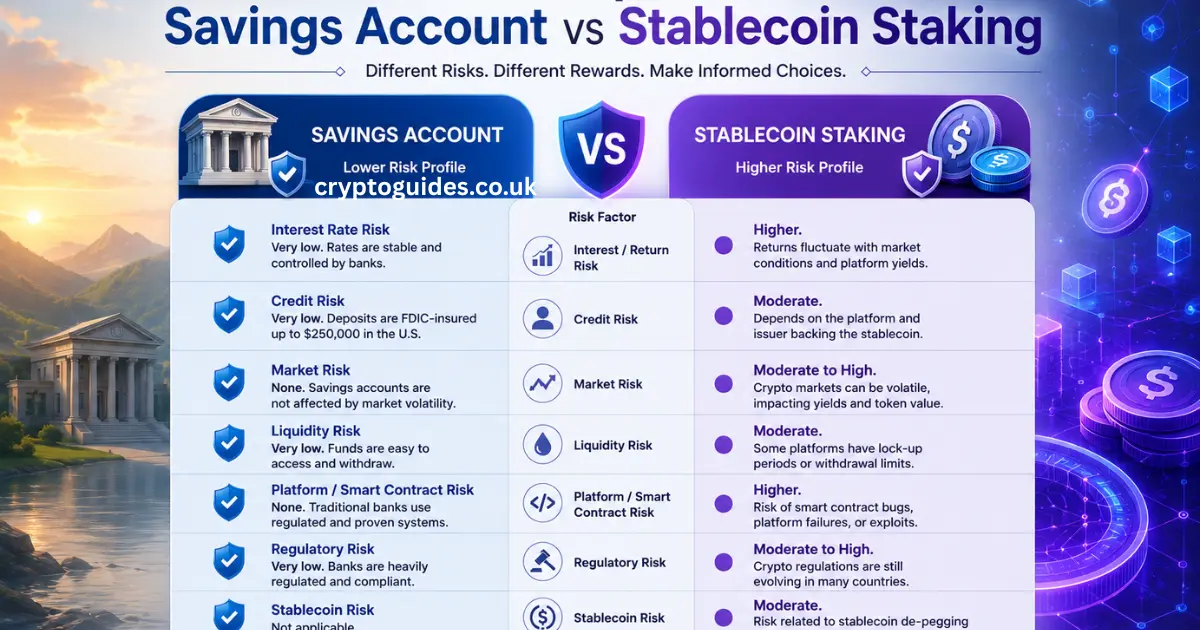
Risk often determines whether an investment succeeds or fails. Savings accounts carry relatively low risk because federal regulations protect depositors. Stablecoin staking introduces technological, operational, and market-related uncertainties.
Before choosing any income strategy, investors should understand potential downsides. A strong return means little if the underlying platform cannot safeguard assets effectively.
Banking Risks
Bank failures remain rare, especially when federal protections apply.
Stablecoin Risks
Stablecoins can lose their peg under extreme market conditions.
Platform Risks
Exchanges and lending services may face operational problems or financial stress.
Market and Regulatory Risks
Government regulations continue evolving across the cryptocurrency sector.
How Safe Are High-Yield Savings Accounts?
Safety remains the biggest reason many Americans choose savings accounts over alternative investments. Most deposits in an FDIC-insured savings account receive protection up to applicable federal limits. This protection means that even if a participating bank fails, eligible deposits remain secure. For people building emergency funds or saving for short-term goals, this level of protection provides valuable peace of mind.
Another advantage is transparency. Banks operate under strict regulations and must disclose fees, interest rates, and account terms clearly. Unlike many investment products, savings accounts do not require technical knowledge or constant monitoring. Investors who prefer low-risk investments often choose these accounts because they combine security, liquidity, and predictable returns in one simple package.
Understanding FDIC Insurance
FDIC insurance protects eligible deposits when an insured bank fails, making savings accounts one of the safest places to store cash.
Bank Stability and Consumer Protection
Federal regulations, consumer protection laws, and banking oversight help reduce risk for account holders.
Why Many Investors Choose Savings Accounts
Many investors value stability more than maximum returns. They prefer preserving capital while earning consistent interest.
How Safe Is Stablecoin Staking?
Stablecoin staking can be relatively safe compared to other crypto investments, yet it carries unique risks that investors must understand. Unlike banks, most staking providers do not offer government-backed protection. The safety of your funds often depends on platform security, operational practices, and the quality of the stablecoin itself.
Security varies widely among providers. Established exchanges and secure staking platforms typically invest heavily in cybersecurity and compliance measures. However, risks still exist. A platform hack, operational failure, or coding vulnerability could affect investor funds. Understanding these factors helps investors make informed decisions before allocating money to staking opportunities.
Stablecoin Depegging Risk
A stablecoin may temporarily lose its intended value during market stress, creating unexpected losses.
Smart Contract Vulnerabilities
Many staking services rely on automated code. A flaw in that code can expose users to smart contract risk.
Exchange and Platform Risks
Even reputable platforms face operational and cybersecurity challenges.
Security Best Practices for Crypto Investors
Using strong passwords, hardware wallets, and trusted providers can reduce exposure to avoidable risks.
Best High-Yield Savings Accounts for Passive Income
The market for savings accounts has become highly competitive. Many online banks now offer attractive rates, no monthly fees, and user-friendly digital tools. These features make the best high-yield savings accounts appealing for people seeking dependable passive income without investment complexity.
When comparing accounts, investors should examine more than interest rates alone. Customer service, withdrawal flexibility, fee structures, and account accessibility also matter. A slightly lower APY may be worthwhile if the institution offers better overall value and convenience.
Features to Look For
Investors should compare account fees, mobile banking features, customer support quality, and interest rates.
Top Online Banks Offering Competitive APYs
Many online financial institutions consistently provide some of the strongest high-yield savings account rates available.
Comparing Fees, APYs, and Accessibility
The best account balances competitive returns with easy access to funds and minimal fees.
Best Stablecoins for Staking Rewards
Not all stablecoins offer the same risk profile or earning potential. Investors often compare several options before selecting a staking strategy. Understanding the strengths and weaknesses of different assets can improve long-term results.
The most widely used stablecoins benefit from deep liquidity, strong market adoption, and broad platform support. These characteristics often influence available yields and overall security. Investors seeking stablecoin investment opportunities typically focus on assets with established track records.
USDC Staking
USDC is widely viewed as one of the more transparent stablecoins available today.
USDT Staking
USDT remains one of the largest stablecoins by market capitalization and usage.
DAI Staking
DAI operates within the decentralized finance ecosystem and uses a different stabilization model.
Comparing Popular Stablecoins
Each stablecoin offers different levels of transparency, liquidity, and reward potential.
Liquidity and Accessibility: Which Option Gives You Faster Access to Funds?
Liquidity determines how quickly you can access your money when needed. Savings accounts generally provide excellent liquidity. Most banks allow transfers, withdrawals, and account access through mobile apps and online banking platforms. This convenience makes them attractive for emergency savings and short-term financial goals.
Stablecoin staking can vary significantly. Some platforms offer flexible withdrawals while others require lock-up periods. Investors should understand withdrawal policies before committing funds. Effective liquidity management becomes especially important when unexpected expenses arise or market conditions change suddenly.
Withdrawal Rules for Savings Accounts
Most savings accounts provide quick access to funds without significant restrictions.
Lock-Up Periods in Staking
Certain staking programs require funds to remain deposited for a fixed period.
Emergency Fund Considerations
Emergency savings should remain easily accessible regardless of investment strategy.
Which Option Is More Flexible?
Savings accounts generally provide greater flexibility for short-term financial needs.
Tax Implications of Stablecoin Staking and Savings Account Interest
Taxes play a major role in determining actual investment returns. Interest earned from savings accounts is generally taxable income in the United States. Financial institutions typically provide annual tax forms to simplify reporting requirements.
Staking rewards may also be taxable depending on applicable regulations. Because cryptocurrency taxation continues to evolve, investors should maintain detailed records of transactions, rewards, and withdrawals. Consulting a qualified tax professional can help avoid mistakes and ensure compliance.
How Savings Account Interest Is Taxed in the United States
Interest earned from bank accounts is generally reported as taxable income.
How Staking Rewards Are Taxed
Many jurisdictions treat staking rewards as taxable when received.
Tax Reporting Tips for Investors
Maintaining accurate records helps simplify tax preparation.
Common Tax Mistakes to Avoid
Poor recordkeeping often creates unnecessary complications during tax season.
Can Stablecoin Staking Outperform Traditional Savings Accounts?
One of the most common questions investors ask involves return potential. Historically, staking often delivers higher yields than traditional savings products. This difference explains why many people explore crypto savings alternatives and crypto interest accounts when seeking additional income.
Still, higher returns do not guarantee better outcomes. Risk-adjusted performance matters. A lower but stable return may be preferable for conservative investors. The ideal choice depends on personal risk tolerance, financial goals, and investment time horizon.
Historical Yield Comparisons
Staking rewards have often exceeded traditional savings account yields.
Real-World Examples
Many investors diversify by combining both strategies rather than choosing only one.
Situations Where Staking May Generate More Income
Higher-yield environments can increase staking profitability significantly.
Situations Where Savings Accounts May Be Better
Investors prioritizing safety often prefer traditional banking products.
FDIC Insurance vs Crypto Security: What Investors Should Know
The security gap between banks and cryptocurrency platforms remains one of the biggest differences in this comparison. FDIC insurance provides a government-backed safety net for eligible deposits. This protection reduces uncertainty and strengthens consumer confidence.
Crypto platforms rely on cybersecurity systems, operational controls, and risk management practices rather than government guarantees. While many providers invest heavily in security, the responsibility for evaluating risk often falls on the investor. Understanding this distinction is critical before making any financial decision.
What FDIC Insurance Covers
Eligible bank deposits receive protection against institution failure within established limits.
What Crypto Security Measures Protect
Encryption, cold storage, and security audits help safeguard digital assets.
Key Differences Every Investor Should Understand
Insurance protects deposits while crypto security focuses on preventing losses.
Who Should Choose a High-Yield Savings Account?
A high-yield savings account works well for investors who value security, simplicity, and accessibility. People saving for emergencies, vacations, home purchases, or other short-term goals often benefit from predictable returns and easy access to funds.
These accounts also suit individuals who dislike market volatility. Investors seeking fixed-income alternatives and dependable returns frequently choose savings accounts as part of a broader financial strategy.
Best for Conservative Investors
Risk-averse individuals often prioritize capital preservation over maximum returns.
Best for Emergency Funds
Easy access and strong protection make savings accounts ideal for emergencies.
Best for Short-Term Financial Goals
Short-term objectives typically benefit from stability and liquidity.
Who Should Invest in Stablecoin Staking?
Stablecoin staking may appeal to investors comfortable with moderate risk who want higher income potential. Those interested in digital asset investing, DeFi staking, and innovative financial technologies often find staking attractive.
Investors pursuing diversified passive income strategies sometimes combine staking with traditional assets. This approach can create exposure to both traditional finance and emerging cryptocurrency opportunities.
Best for Risk-Tolerant Investors
Investors willing to accept additional uncertainty may benefit from higher yields.
Best for Crypto Users Seeking Passive Income
Staking allows holders to generate crypto passive income from existing assets.
Best for Diversified Portfolios
Combining traditional and digital assets may improve portfolio flexibility.
High-Yield Savings Account vs Stablecoin Staking: Final Thought
The debate between a savings account and stablecoin staking does not have a universal winner. If your primary goal is safety, liquidity, and simplicity, a savings account remains the stronger option. It offers predictable returns, regulatory protection, and accessibility that few alternatives can match.
If your goal is maximizing income and exploring modern yield-generating assets, stablecoin staking may offer greater opportunities. However, those rewards come with additional risks. Many investors find the most balanced approach involves using savings accounts for security while allocating a smaller portion of funds to carefully selected staking opportunities. This combination creates exposure to both traditional savings and emerging savings account alternatives, helping investors pursue growth while maintaining financial stability.
FAQs
Is stablecoin staking better than a high-yield savings account?
Stablecoin staking may offer higher returns, but high-yield savings accounts generally provide greater security and lower risk.
Can you lose money with stablecoin staking?
Yes. Risks include stablecoin depegging, platform insolvency, smart contract vulnerabilities, and market-related issues.
What is the average APY for a high-yield savings account?
Most competitive high-yield savings accounts offer APYs ranging from 3% to 5%, depending on market conditions.
Which stablecoin is best for staking?
USDC, USDT, and DAI are among the most popular stablecoins for earning staking rewards.
Is stablecoin staking safe?
It can be relatively safe compared to other crypto investments, but it still carries risks not typically found in bank savings accounts.
Are high-yield savings accounts FDIC insured?
Many U.S. high-yield savings accounts are FDIC-insured up to applicable limits, providing protection against bank failure.
How much can I earn from stablecoin staking?
Returns vary by platform and stablecoin but commonly range between 3% and 12% APY.
Can I withdraw my funds anytime from stablecoin staking?
It depends on the platform. Some offer flexible withdrawals, while others require lock-up periods.
Which option is better for passive income?
Stablecoin staking may generate higher passive income, while high-yield savings accounts prioritize capital preservation and stability.
Is interest from savings accounts taxable?
In many countries, interest earned from savings accounts is considered taxable income.
Secure Your Crypto the Right Way
For safer crypto storage, you may also check hardware wallets such as Ledger Nano to keep your coins secure offline.

I am an SEO and Guest Posting expert with 5+ years of professional experience in building high-authority backlinks, strategic outreach, and scalable SEO campaigns, especially in the Crypto and Blockchain industry. Passionate about helping brands achieve sustainable organic growth, I specialize in guest posting, white-hat authority link building, content outreach, and digital PR strategies that enhance online credibility and search engine performance. Over the years, I have collaborated with international clients and global brands, delivering result-driven SEO solutions and placements on high-authority, high-DR websites focused on increasing organic traffic, domain authority, and online visibility in competitive markets.